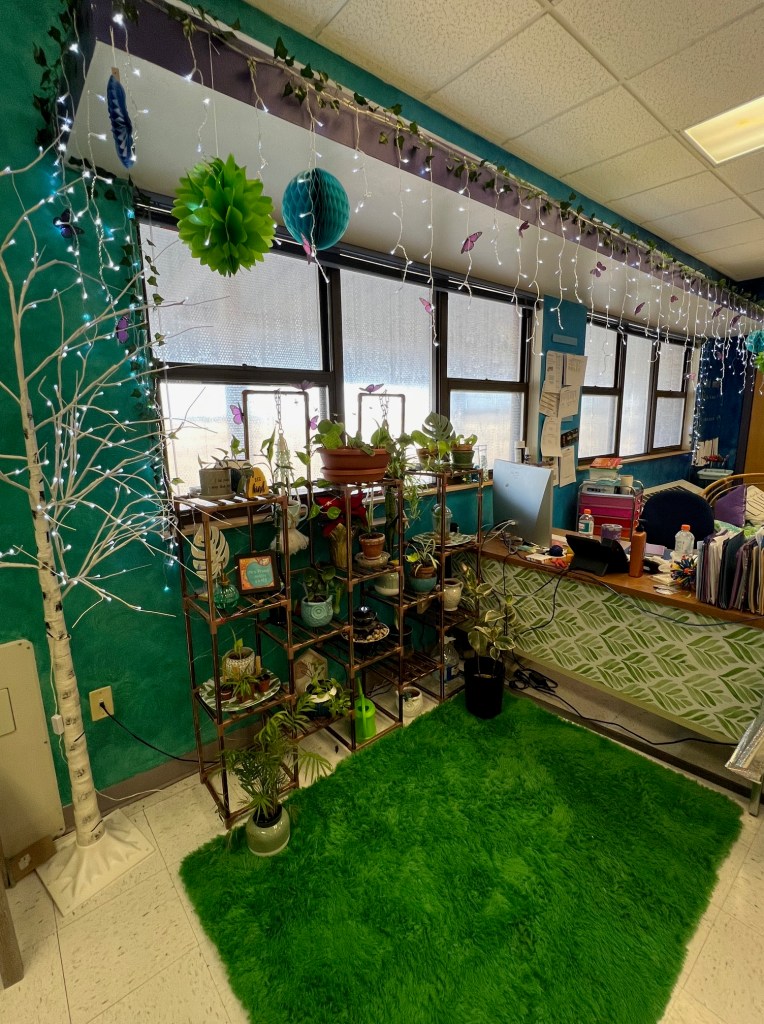
My classroom has big windows that let in a lot of light, which is awesome. They’re north-facing, so the room doesn’t get too hot, but there’s enough light coming in to keep a few pothos, spider plants, and sansevierias happy.
That’s great when the weather is warm, but my desk is right next to a window, and it got COLD this winter. I got tired of shivering and decided the district’s business manager was probably tired of paying a fortune for heating bills, so I got on Amazon and ordered a big roll of bubble wrap.

Bubble wrap makes fantastic window insulation, and it’s extremely easy to install: Cut sheets of wrap to fit the window, spray the glass with plain old water (I used a plant mister for this, but a spray bottle works just as well), and stick the bubble wrap on. The water creates a suction-cup effect between the glass window and the plastic.
You’ll have to reapply water here and there as it dries, because the bubble wrap will start to come loose, but the time investment on that is minimal — maybe two minutes a week, including the time it takes to refill the mister, and my kids usually notice the plastic loosening up and tell me about it before I even notice. It looks a little odd up close, but from a distance, it just looks like frosted glass.

Bonus: Bubble wrap is translucent, so your room will still get plenty of light, but it’s not transparent, so the kids can’t see through it easily. That’s a big help in my classroom, which faces the street in front of the building. Before I put up the plastic, my nosy middle schoolers were constantly looking out the window and getting distracted by whatever was happening outside. With the plastic up, they can still see shapes moving past, but it’s cut down on a lot of the distractions.
I gave about $16 for a 100-foot roll of bubble wrap on Amazon and spent maybe half an hour installing it. I’m pretty happy with the ROI; anything that can lower energy costs and raise test scores at the same time is worth $16 and 30 minutes to me.

 Foolish Wand-Waving