

Posted in Classroom environment, Classroom reveal, Decor, Student engagement, Whimsy

Chapter 77: Classroom Reveal 2025

I didn’t bother with a classroom reveal last year, because frankly, my classroom was a bit underwhelming. After a year of dodging reckless drivers on I-40, I decided the risk of flaming death was just a little too high for my comfort, so in the spring of 2024, I applied for a job teaching sixth-grade ELA at a school much closer to home. It was a great assignment, except for one glaring problem: I couldn’t convince the upper-level administrators to let me paint my room, so I had to settle for fairy lights and whimsical bulletin boards. The kids and their parents were impressed, but I wasn’t. Temporary wall hangings feel hopelessly liminal to me, and liminal spaces have an aura of wrongness about them that no amount of wishful thinking will overcome.

After my kids posted stellar scores on the middle-of-year benchmark test, I went to our then-superintendent — who was new to the district and very enthusiastic about Doing Things Differently, and whose support I’d been cultivating for several months — and asked again.

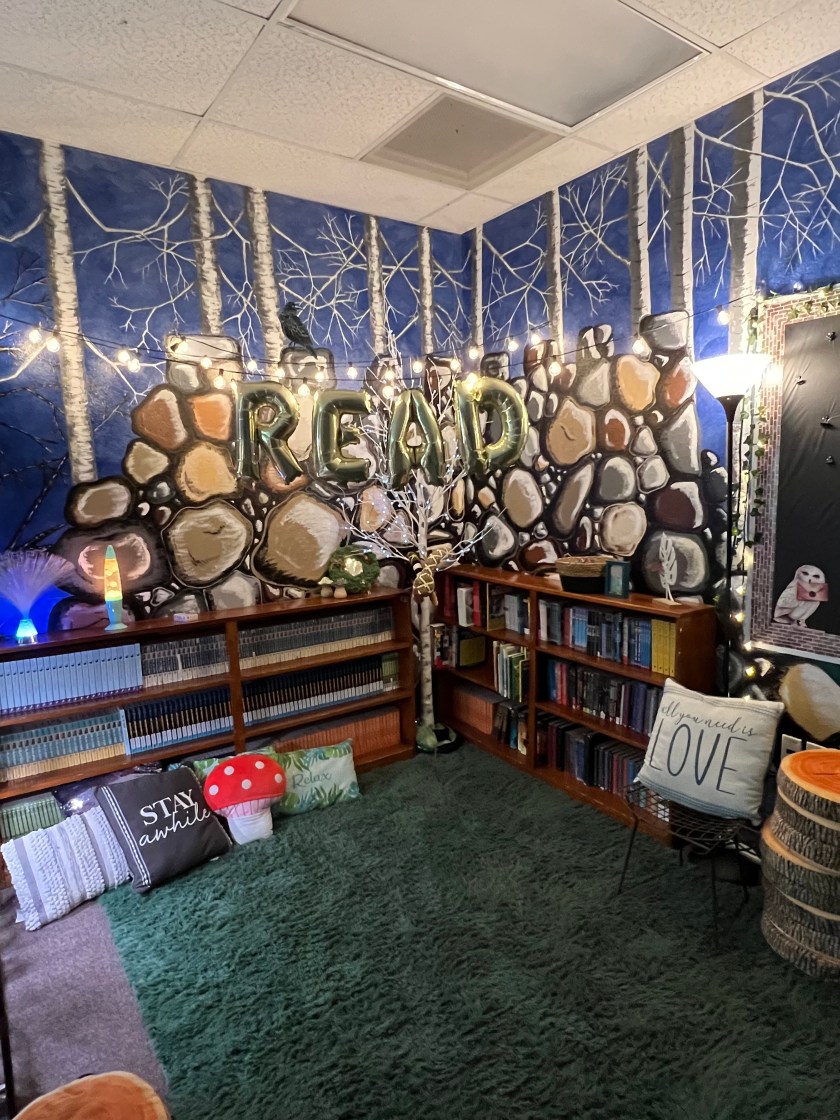
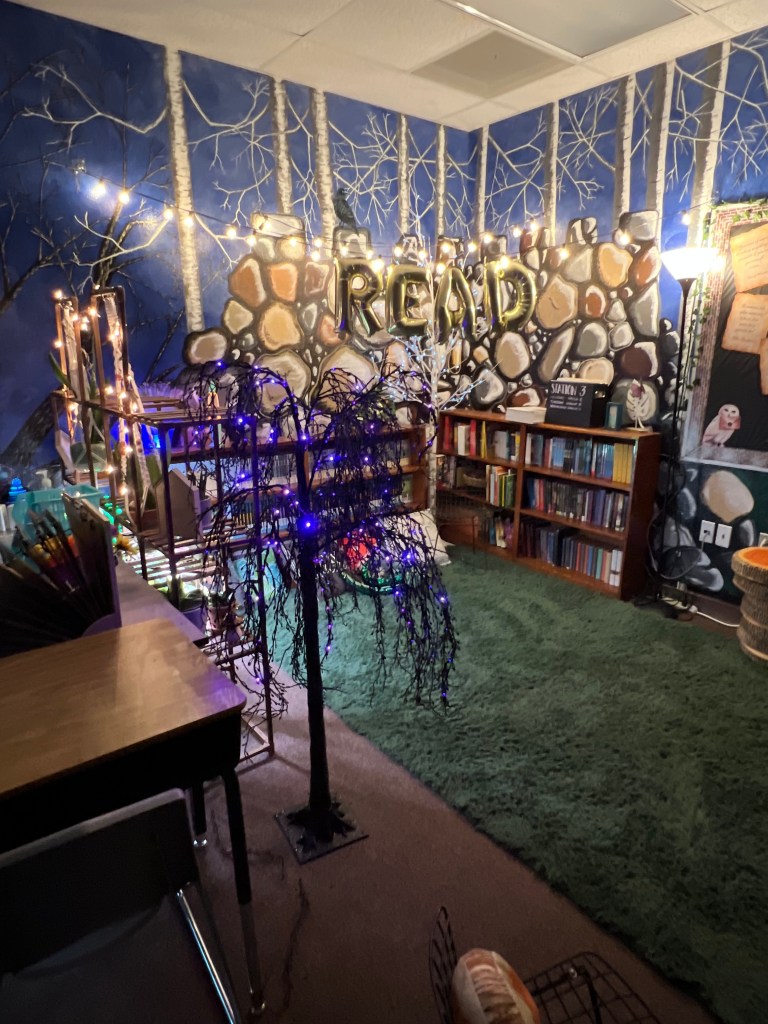
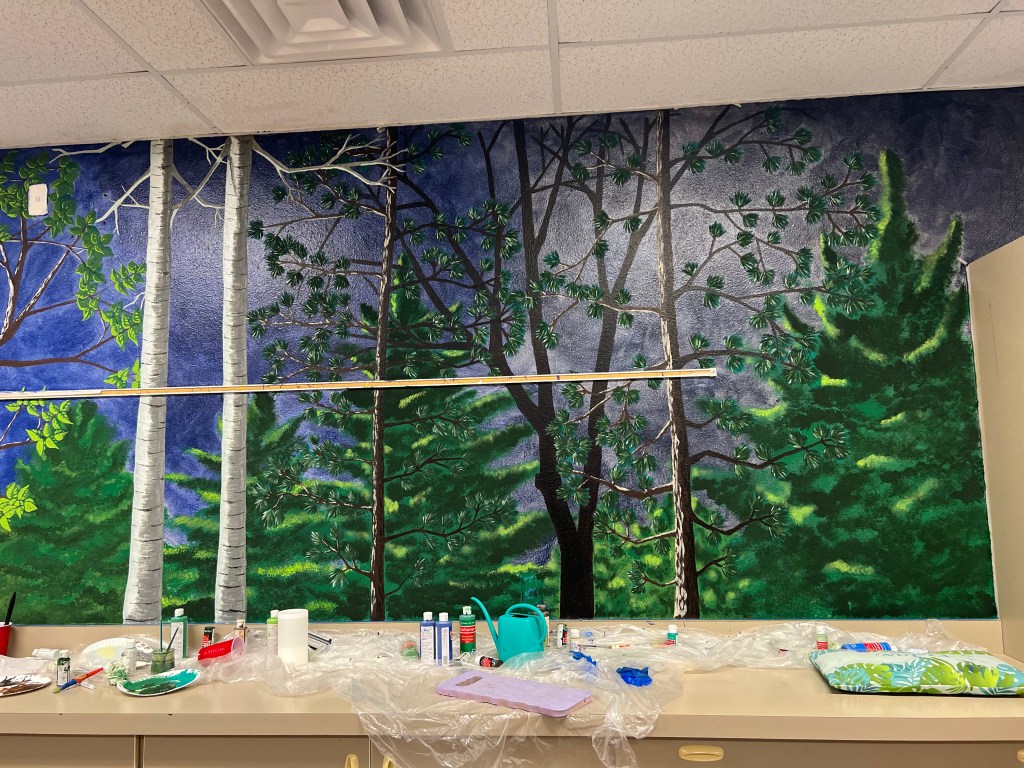
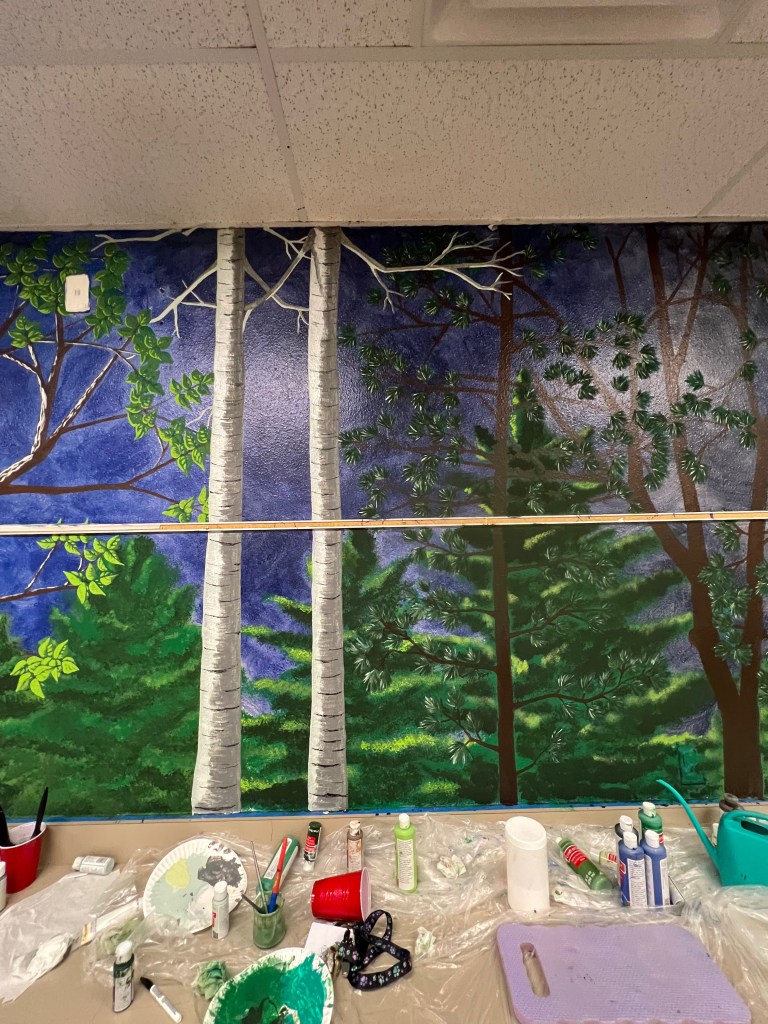
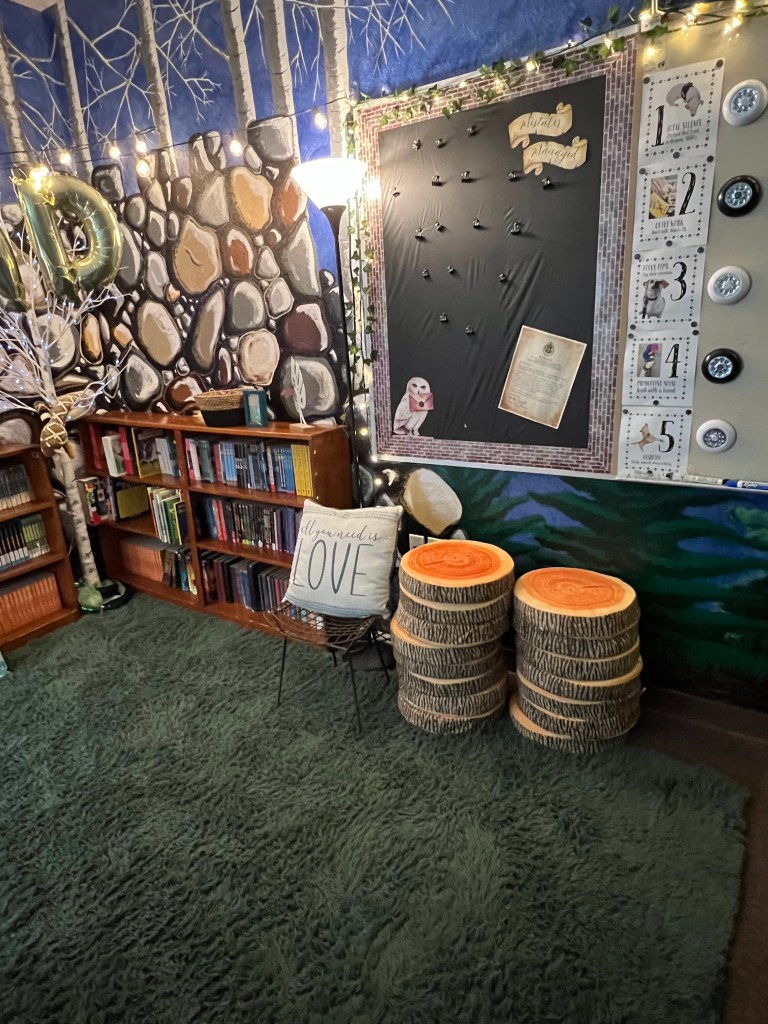
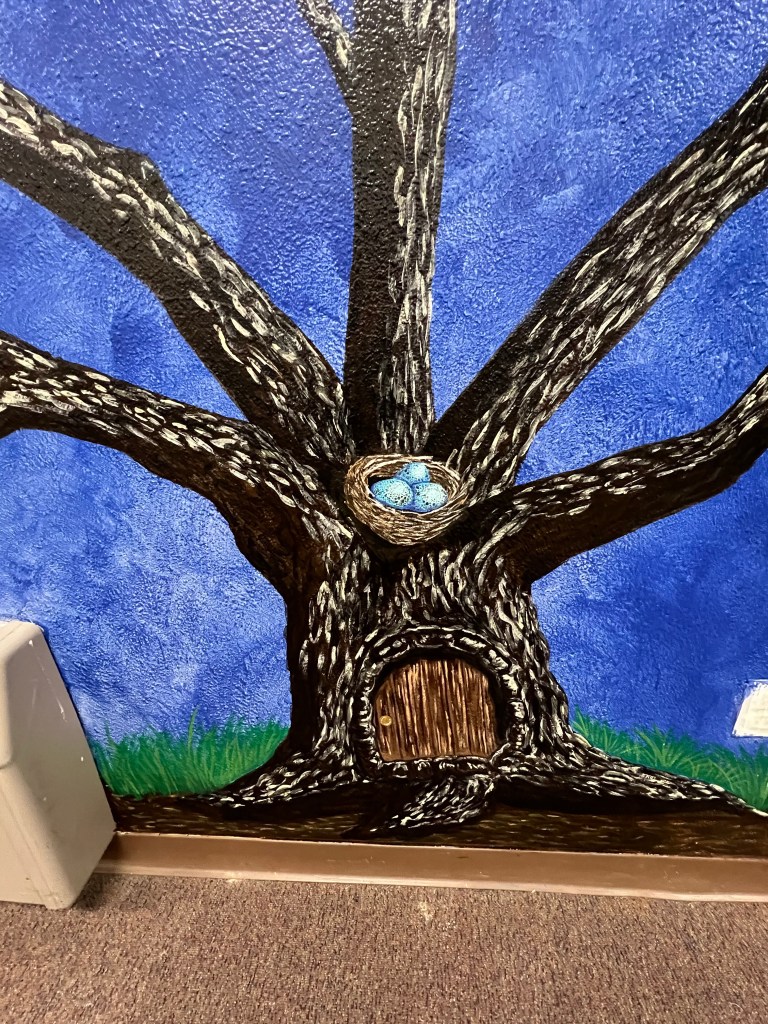
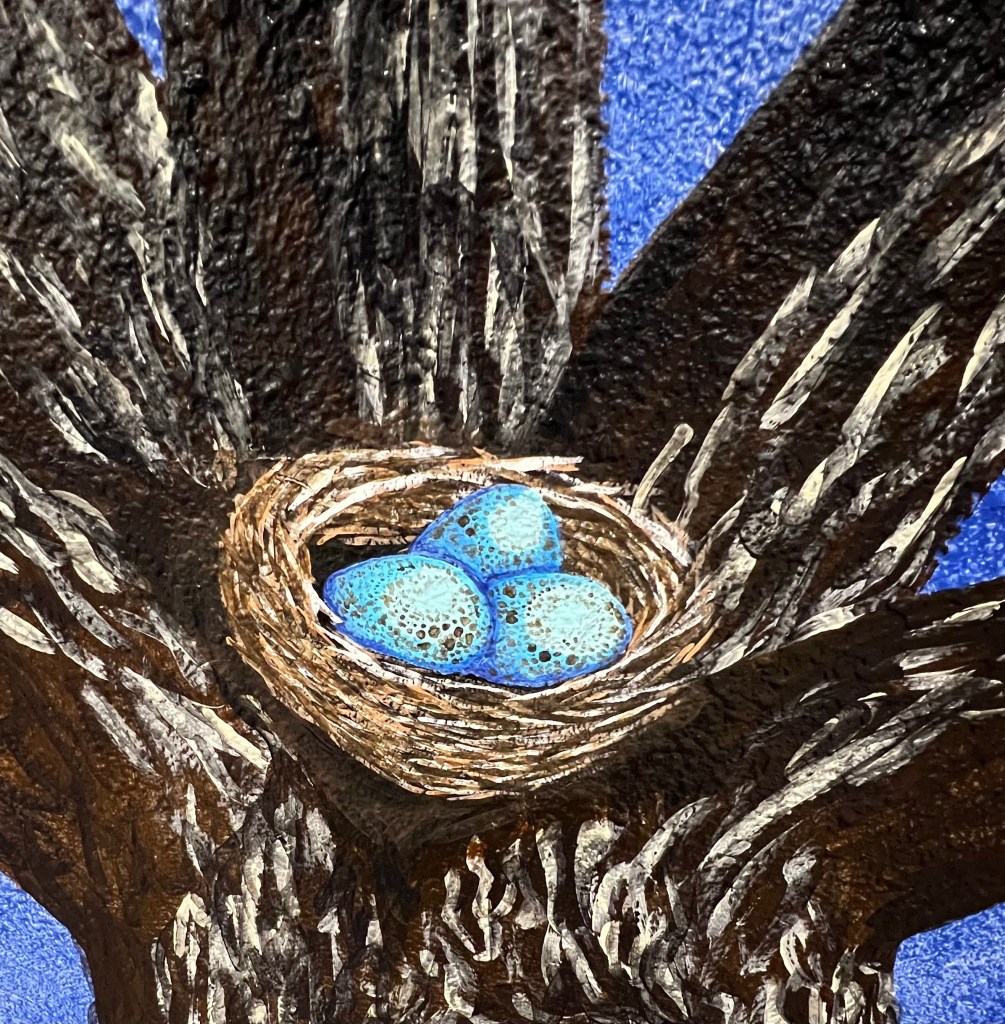
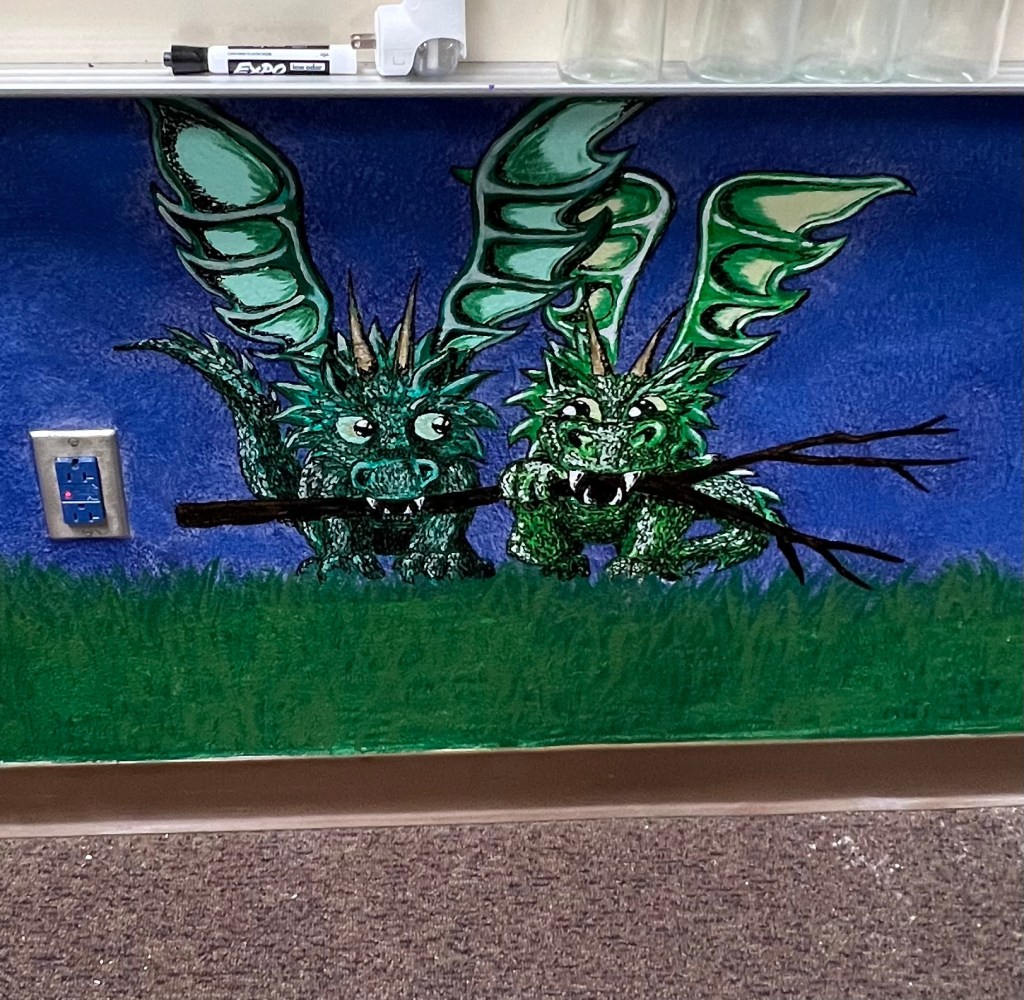
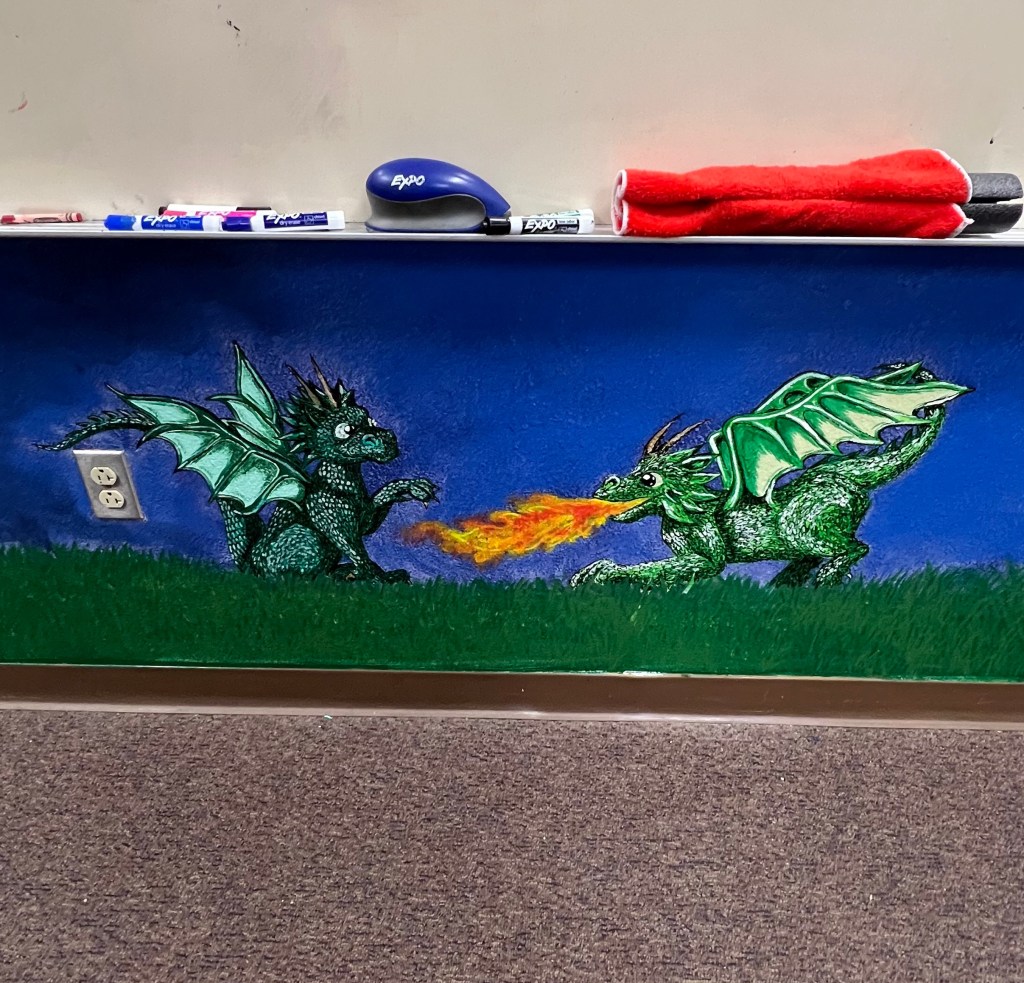
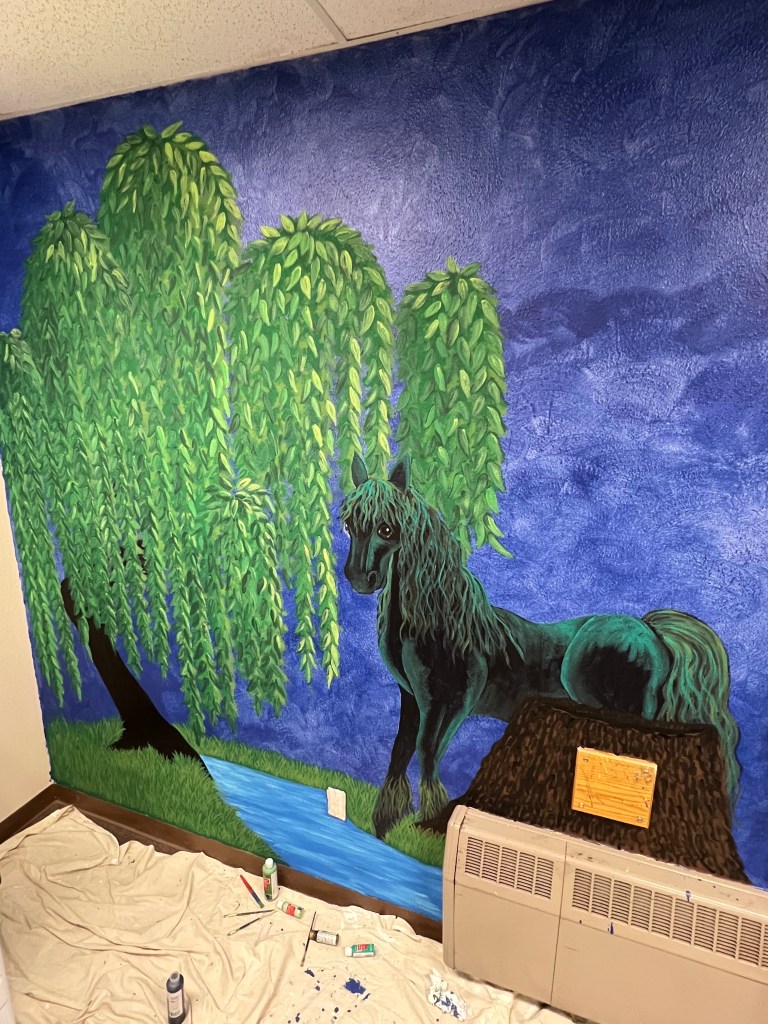
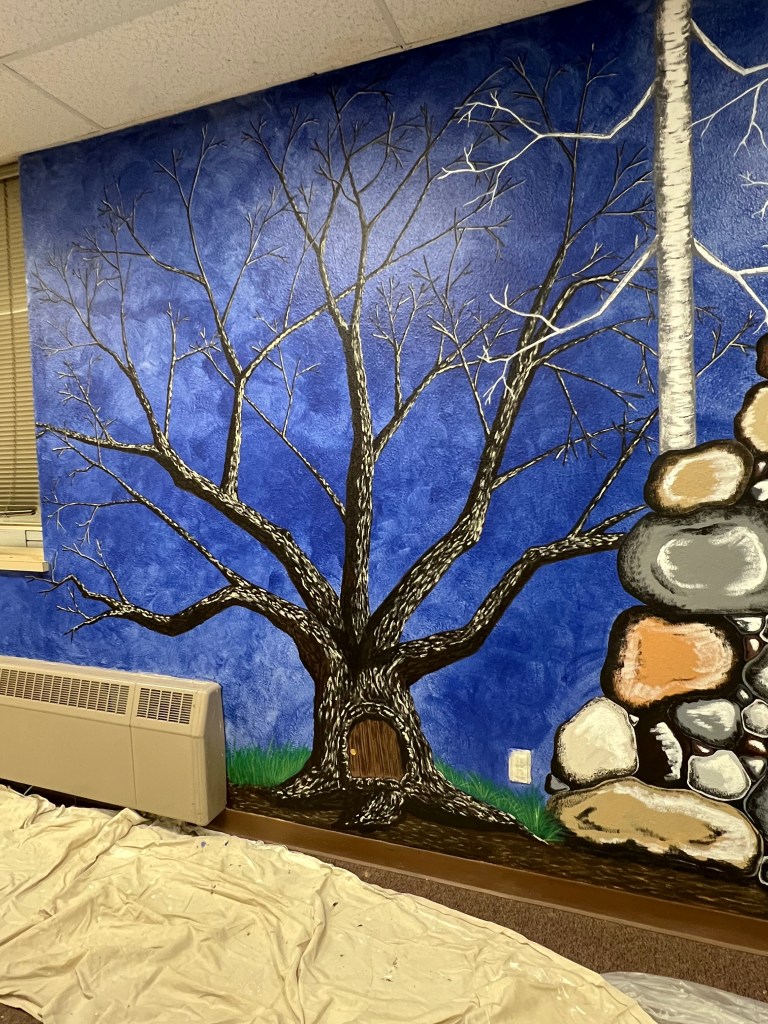
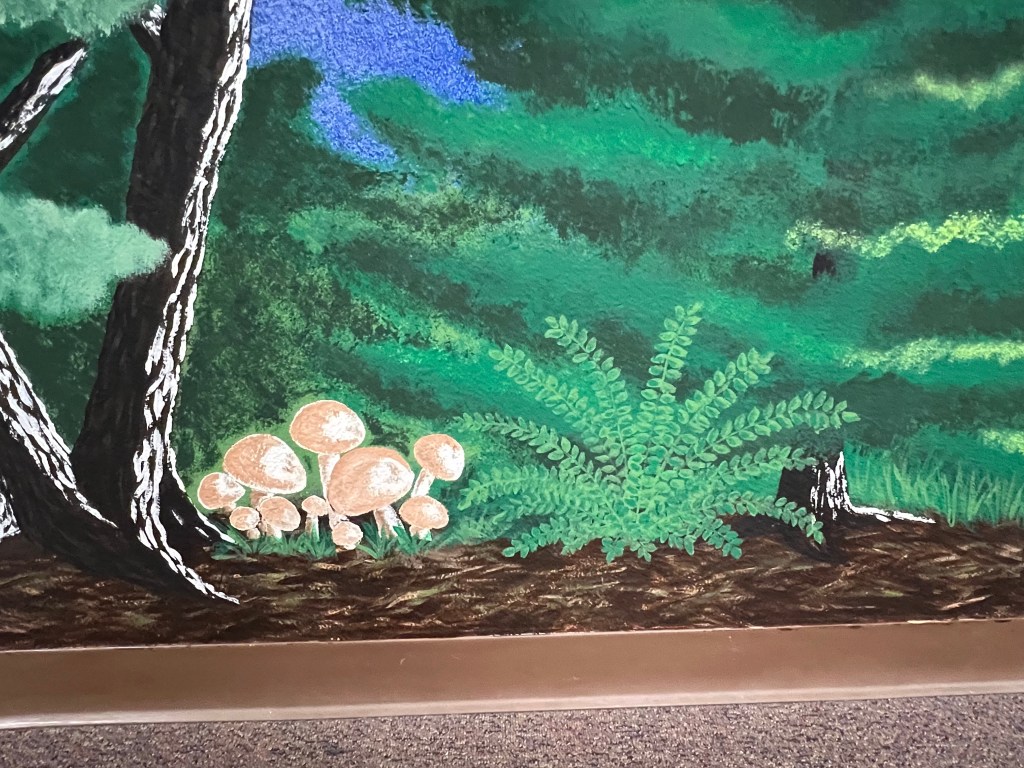
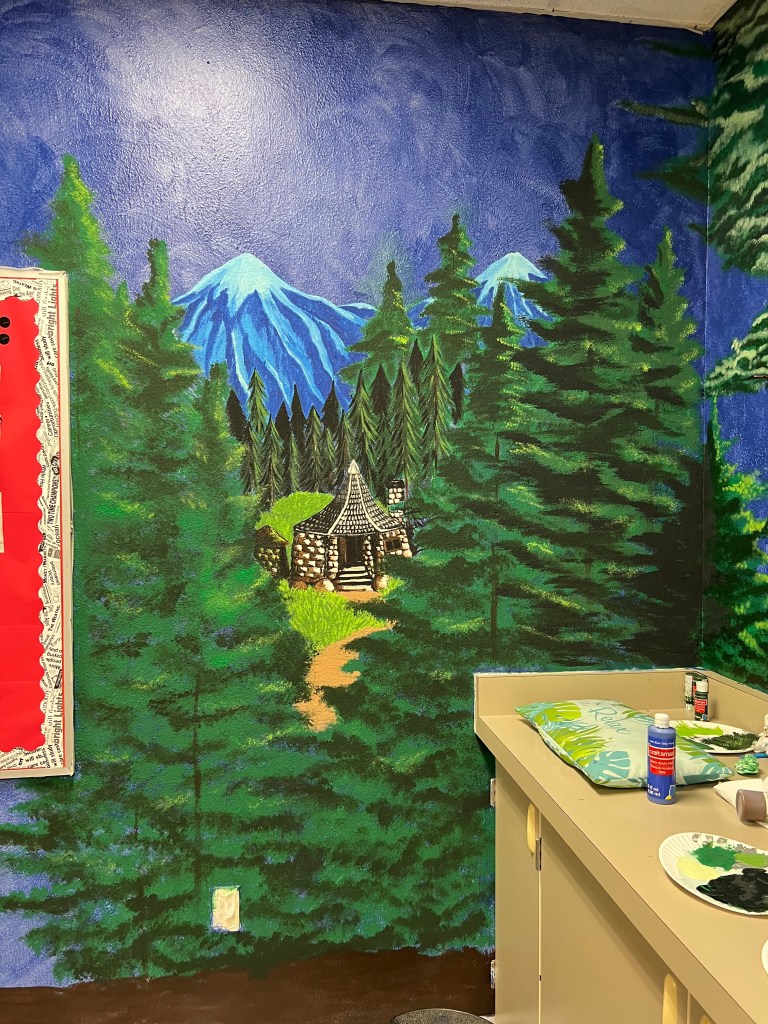
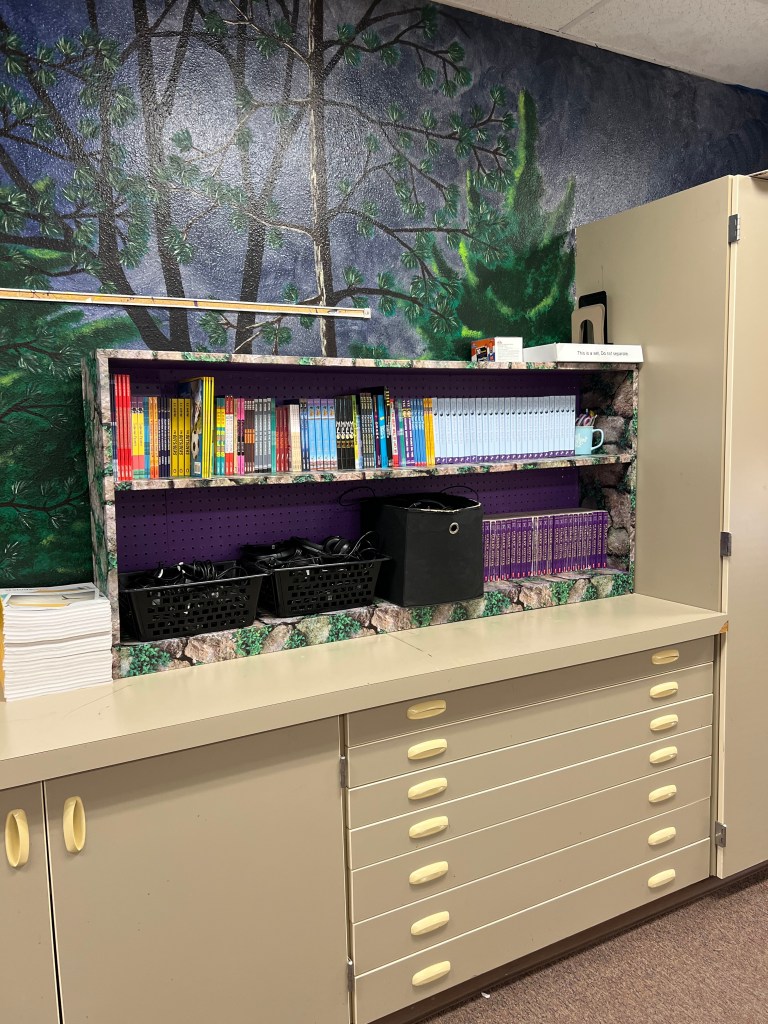
Welcome to the enchanted forest, where dragon puppies frolic below a whiteboard, a deceptively cute kelpie dips a toe into a stream running next to my desk, a spooky old tree sports a clutch of raven’s eggs and a likely portal to the Otherworld (conveniently tucked out of sight under a worktable), and the bookcases lean against the stone remnants of some long-forgotten castle, watched over by a raven who may or may not be* an incarnation of a Celtic battle goddess. In a nod to my Potterheads, I also tucked Hagrid’s hut into a little clearing behind some evergreens, and there’s enough open space here and there for me to add flourishes later if the mood strikes me.

The kids love it, and it’s making the workstation format that I’m using this year way more fun than it has any right to be. Three days a week, the kids work in small groups, rotating to a different workstation each day — one focused on writing, one on mechanics, and one on reading. The reading station is in the corner, where they sit on log-slice pillows atop a fluffy green carpet and relax while they learn to annotate the stories they read. On Thursdays, we do whole-group activities, and the kids who are all caught up on their work get to sit on the same carpet and read to my three-legged spaniel mix, Pearl, who was certified as a therapy dog last year. (I’ll have another post on that soon.)

If you can convince your administration to let you paint murals in your classroom, I highly recommend it. A little creativity makes a big difference.

Emily

* Is, of course. My master’s thesis was a novel about a 10-year-old banshee who discovers she is the latest incarnation of the Morrigan. Shapeshifting is one of her powers, and — in keeping with Celtic mythology — she frequently takes the form of a raven.
Posted in Exit tickets, Eyewash, Metacognition, Timesavers, Whimsy

Chapter 75: Emoji Exit Ticket

Confession: I hate exit tickets.

The theory behind them is solid, but in practice, they are largely incompatible with my teaching style, for two reasons:

  1. I am the reigning queen of ADHD time blindness. I barely notice the bell signaling the end of class, and you think I’m going to remember to stop two or three minutes early so the kids can complete an exit ticket? Oh, you sweet, summer child.
  2. One of the biggest strengths of my teaching style is its flexibility. If we’re playing a game, or I’m in the middle of explaining something to a student who asked a last-minute question, or the kids are deeply invested in a class discussion, it would be silly to interrupt that to do something less engaging just so I can check a box on my lesson plan. Good teaching is about knowing when to switch activities and when to say, “Meh. This is better than what I came up with for today. Let’s just roll with it.”

That said, consultants and instructional coaches LOVE exit tickets and will extol their virtues with evangelical zeal at every opportunity. Rather than waste time arguing with fangirls, I simply include a line on every lesson plan that says, “Closer: Exit ticket (5 min.)” and keep a supply of four or five different types and styles of exit tickets on hand to whip out on those days when my executive functioning decides to report for duty. I spent part of one weekend prepping these in bulk so I’d have them available for instant use, which is much easier than trying to remember to prep a kajillion little slips of paper every week.

One of my favorites took the better end of an hour to prep, but it’s reusable, memorable, visually interesting, and involves metacognition, which is another fashionable buzzword. If you want to make your own, here’s what you do:

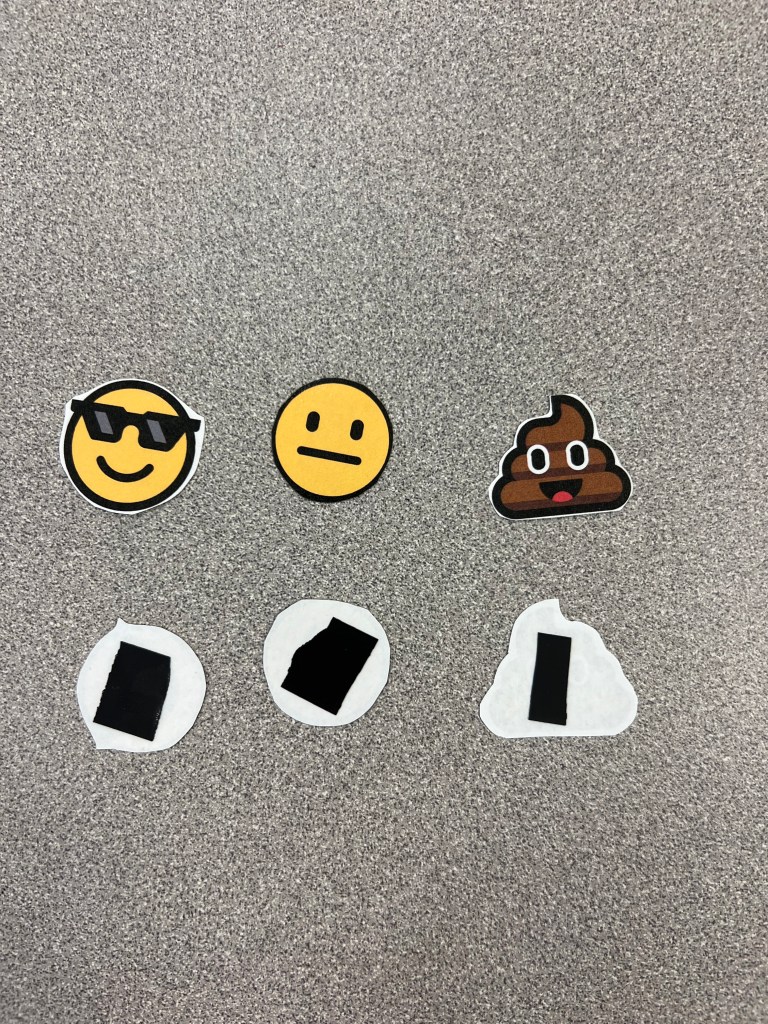
  1. Open a Google Doc, select a 75-point or larger font, and type enough sunglasses emojis to fill a page. (To save time, fill one line and then copy and paste as many times as necessary.)
  2. Repeat with the “meh” and poop emojis.
  3. Print two single-sided copies of the document, laminate it, and cut out the emojis.
  4. Stick a piece of magnetic tape on the back of each emoji and store them in baggies or small containers.

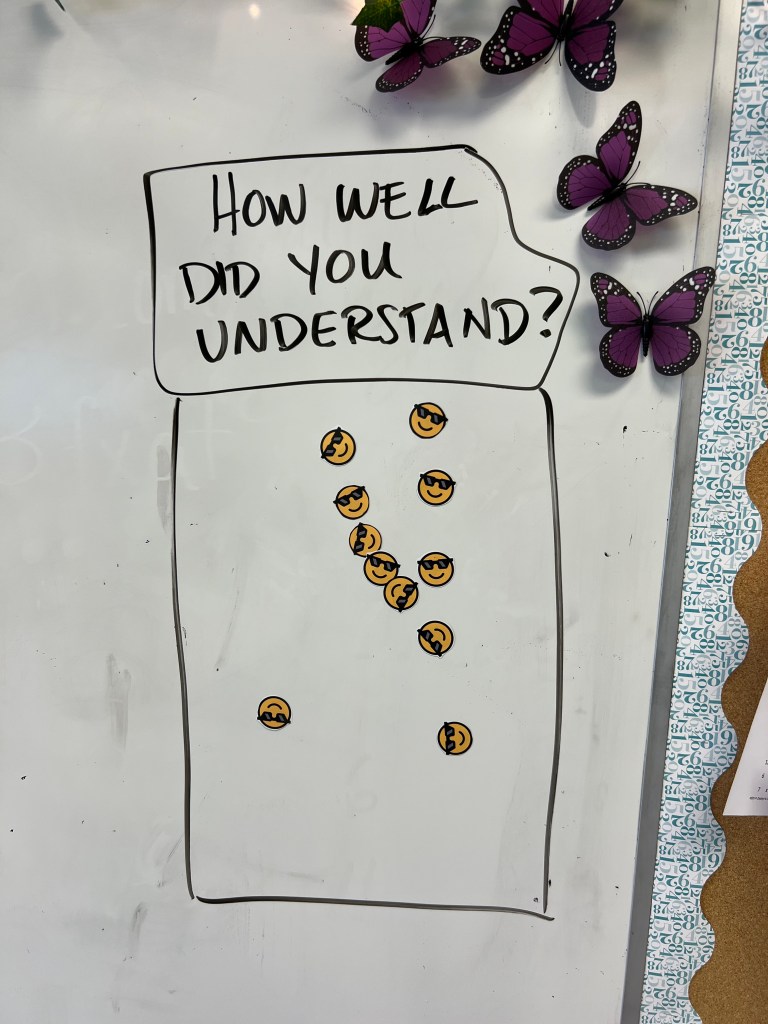
The next time you have a minute or two left at the end of class, get out your emojis and tell the kids that their exit ticket is to choose the one that best matches their current understanding of the lesson and stick it on the board.

Consultants LOVE this, because it hits six buzzwords at once: It’s an exit ticket that serves as a formative assessment by using metacognition as part of the learning cycle in a way that boosts engagement through relevance. (By “relevance,” I obviously mean “scatological humor,” which is EXTREMELY relevant to kids. They love that 💩.)

Posted in Humor, Math, Mnemonic devices, STEM, Whimsy

Chapter 64: Wakanda Forever!

Every now and then, I come up with something ridiculous that works far better than it has any right to. Such was the case a few months ago, when I was teaching my seventh-graders how to use cross-multiplication to find equivalent ratios. I asked a kid to tell me the first step in a problem similar to the one I’d just shown the students, and the response was a blank stare. (Seventh-graders, as it turns out, have the memory of a goldfish and the attention span of a fruit fly. I am still learning workarounds for this.)

“You cross-multiply by multiplying the bottom of one fraction by the top of the other,” I said, making a sort of “X” gesture with my arms and pointing to show which numbers should be multiplied. As I spoke, the gesture reminded me of something, so I closed my hands and added, “Looks kind of like the Wakanda forever salute. That’s how we’re going to remember it.”

The kids rolled their eyes and laughed at their hopelessly white, middle-aged math teacher mimicking T’Challa’s famous salute, and then we tried some more problems. Whenever somebody got stuck, I said, “You need the strength of the Black Panther to solve this one.”

About half the kids now mutter, “Wakanda forever!” while they’re working out equivalent-ratio problems.

I imagine Shuri would approve.

Posted in Classroom environment, Classroom reveal, Decor, Flexible seating, Whimsy

Chapter 62: Belated Classroom Reveal

A new classroom is a new canvas for painting. It’s been my experience that students do not struggle with math because it is too difficult; they struggle with math because they are afraid of it. To help overcome that, I wanted to turn my room into a comfortable, relaxing space that would make them feel the way I felt every time I walked into a Nature Company store in the 1990s.

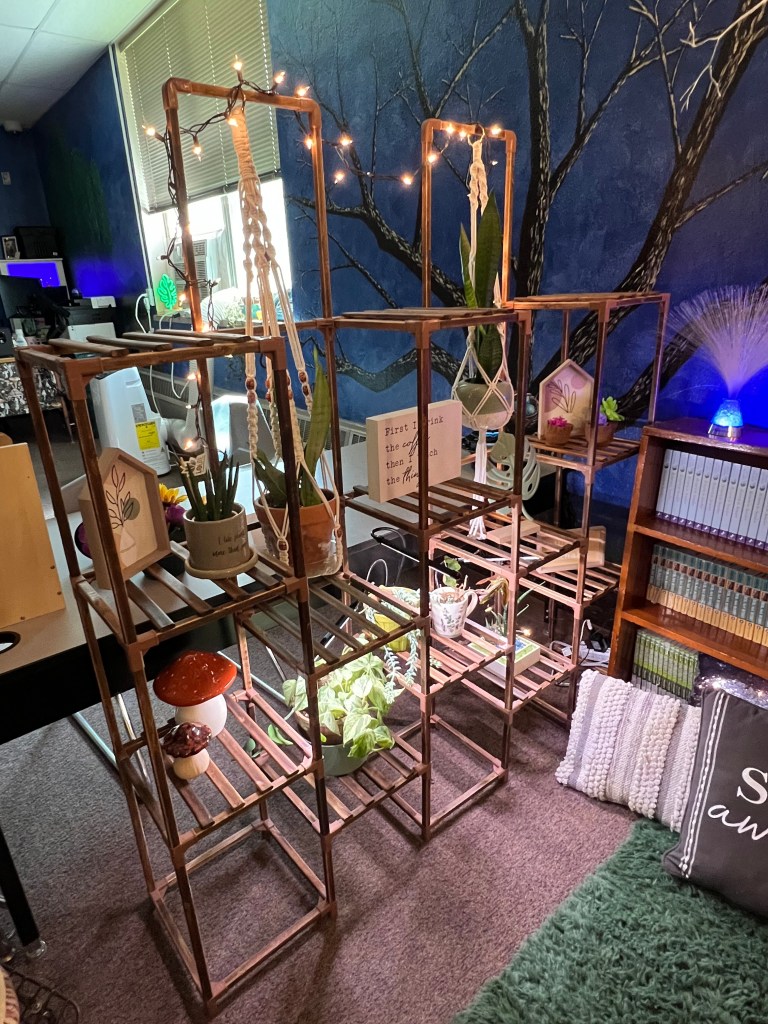
I used a faux-Lazure technique to paint the walls, mixing a few drops of craft paint with roughly three parts Mod Podge and one part water to make a thin glaze that I scrubbed onto the walls with a circular motion. I layered the color onto the walls gradually, which gave it the soft, blended effect you see here. I like this technique because it has a luminosity that makes you feel as if you are standing inside a watercolor painting. I chose a soothing color palette that is supposed to help kids relax and focus.

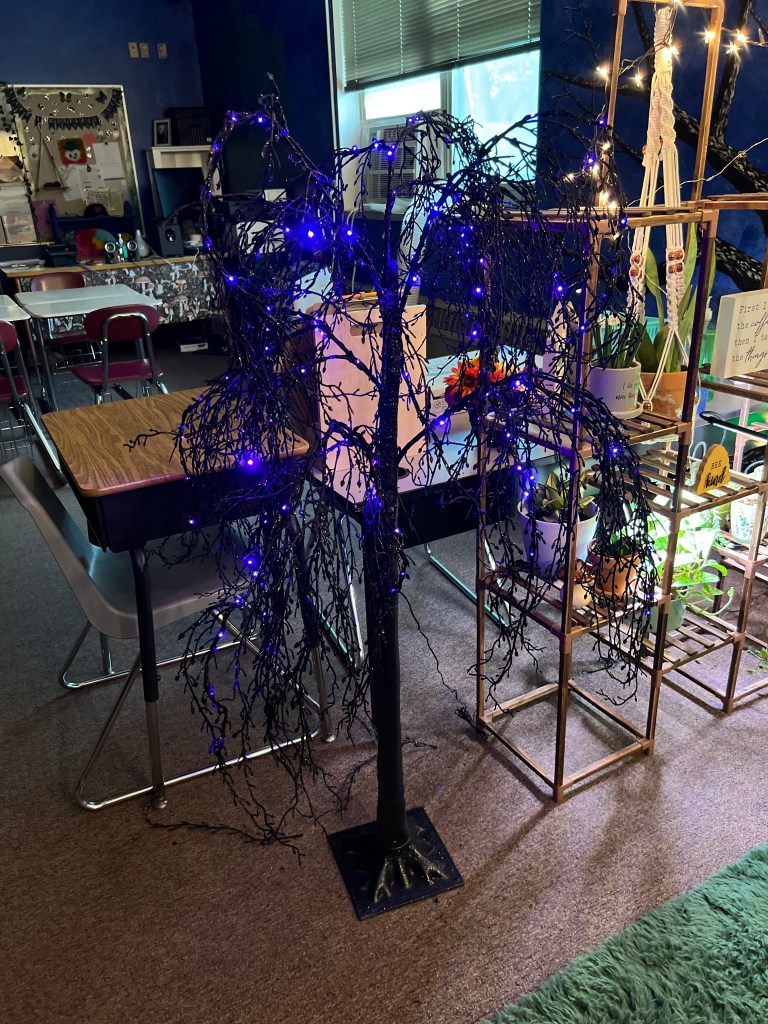
I find houseplants very calming, so I bought a big plant stand from Amazon and covered it with fairy lights, plants from my personal collection, and a tabletop fountain that was given to me by a former student several years ago. (The kids LOVE the fountain.) I gave some consideration to the possibility of building a papier-mache tree in one corner, but the lighted tree was on sale for $80, which was less than I would have spent on materials to construct something myself, and it paired nicely with the icicle lights that I absolutely had to have after seeing that decorative overhang cantilevered above the windows. I love fairy lights and have used them to decorate classrooms for years.

The three ceramic squares are significant because two of them are imperfect: “GOOD VIBES ONLY” has a flaw in the glaze that looks as if someone smudged it before it was fired, and “BE KIND” was stamped at a 90 degree angle, so the holes that are supposed to be on the bottom of the square are actually on the side. The only one that is flawless is “DREAM BIG.” I tell the kids that’s because the only place we are perfect is in our dreams, and while it’s good to strive for perfection, I am never going to demand it in my classroom. All I ask is that they show their work, so if they make a mistake, I can help them correct it.

Posted in Dr. Seuss, ELA, English, Literature, Whimsy

Chapter 50: All the Whos Down in … Heorot?

OMGOMGOMGOMG.

You guys.

You. GUYS.

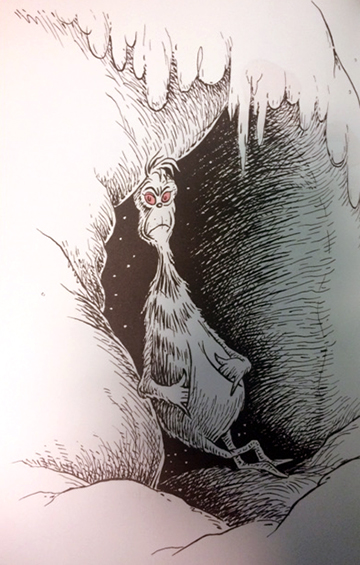
I have no idea how I missed this for 44 consecutive years, but as I was working on lesson plans for my children’s-lit students — who presented How the Grinch Stole Christmas to the K-2 students during a special holiday story hour last month in lieu of a traditional final exam — I noticed something that delighted my little English-teacher heart:

The Grinch is basically Grendel.

I don’t mean the Dr. Seuss children’s classic is a completely faithful retelling of Beowulf, because it is not. But it bears a striking resemblance to the first part of Beowulf, in the same way that Roald Dahl’s Charlie and the Chocolate Factory resembles Dante’s Inferno, and The Lion King resembles Hamlet.

Check it out:

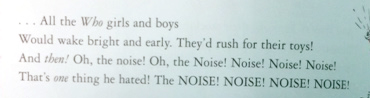
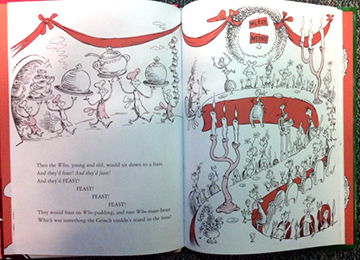
In the Anglo-Saxon epic, King Hrothgar builds a big mead hall called Heorot, where he and his subjects feast, sing, and party like rock stars every night, inciting the rage of the monster who lives in a nearby cave.

In the Seussian epic, (OK, maybe not quite an epic, but by picture-book standards … look, just go with it) the Whos down in Who-ville feast, sing, and party every Christmas, inciting the rage of the monster who lives in a nearby cave.

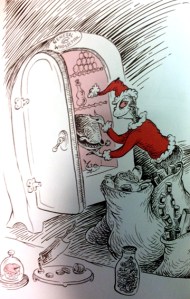
In both stories, the monsters decide to solve their problems by breaking and entering with the intent of committing further crimes.

The poems diverge after this point — the Grinch sticks to larceny in his attempt to quiet his raucous neighbors, while Grendel goes for homicide and cannibalism — but the premises are too similar for me to believe they’re a coincidence.

After all, Dr. Seuss employed iambic tetrameter in Green Eggs and Ham (Sam-I-Am is a pun, as I explain here), so why wouldn’t he draw inspiration from Beowulf?

I’m kind of disappointed I didn’t notice this last year, when my seniors were having so much fun delving into John Gardner’s Grendel. I’d love to hear them debate whether the Grinch is a nihilist or an existentialist.

Emily

Posted in Common Core, Student engagement, Tools, Whimsy

Chapter 44: A New Hope

starwars

OMG, you guys. I just found THEEEEEEEE most ridiculous way to display my Common Core objectives on the Promethean board next fall: the Star Wars Crawl Creator.

It won’t let me save text I enter, so I’ll have to put the daily objectives in a Word file and just copy and paste them in on the fly, but I am HOWLING as I imagine my hilarious incoming sophomores sitting down, looking up at the board, and seeing their objectives scroll up the screen in George Lucas style while John Williams’ famous theme song plays dramatically in the background.

Three days into summer, and I’m already nerding it up. I don’t even know what to say for myself.

Emily