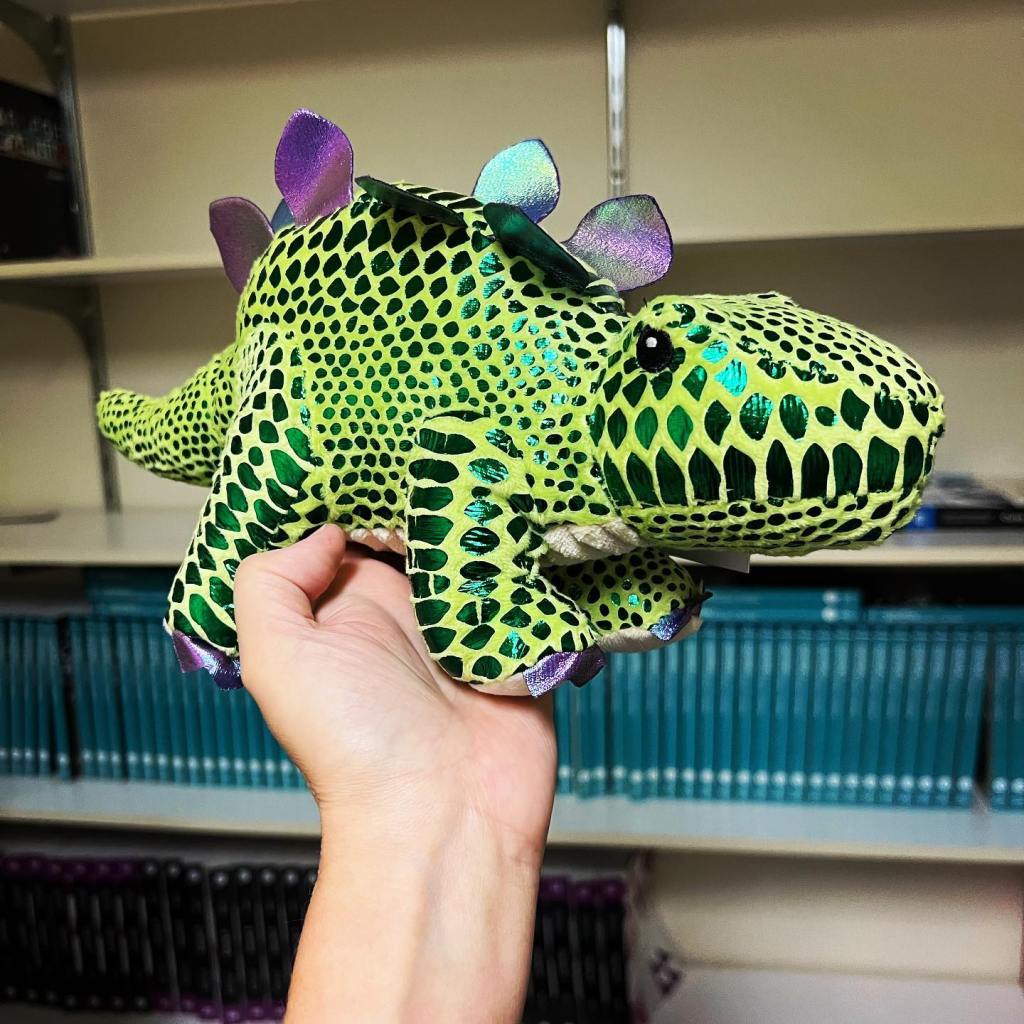
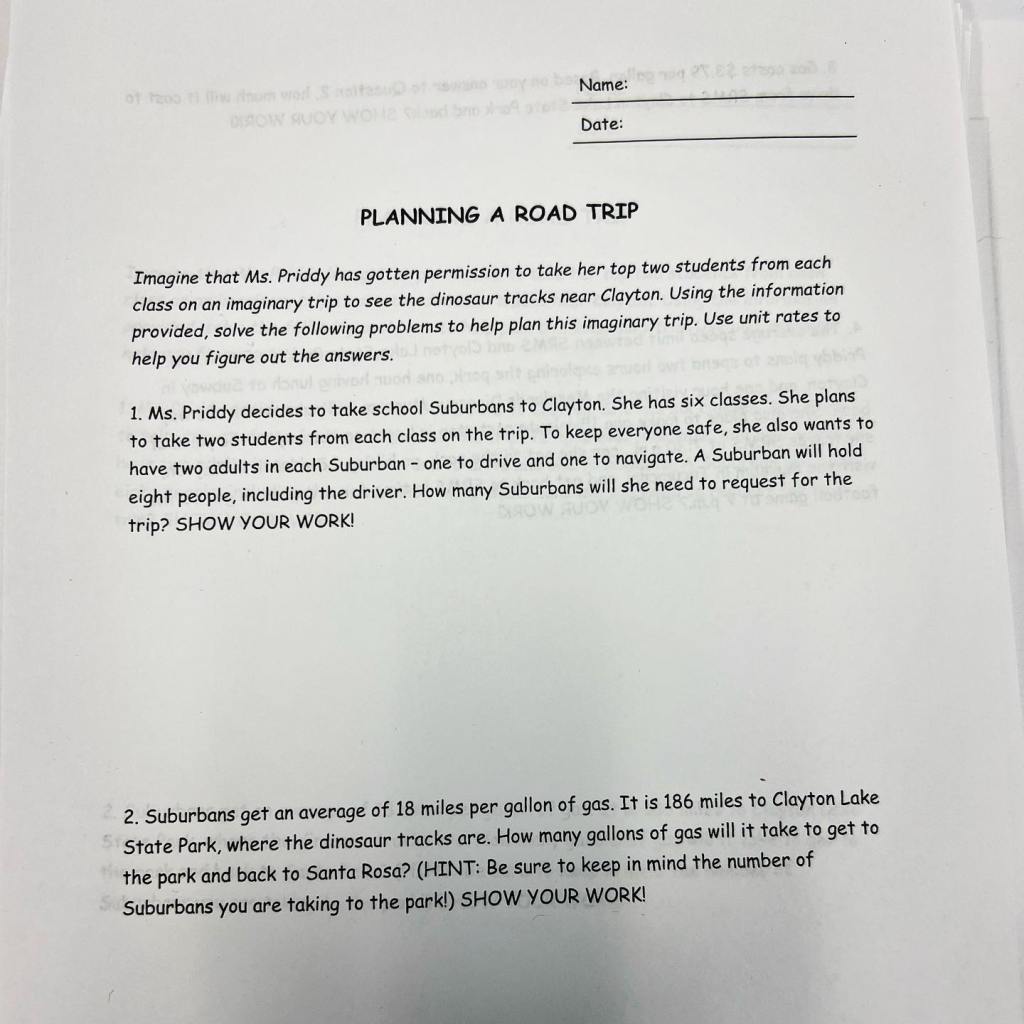
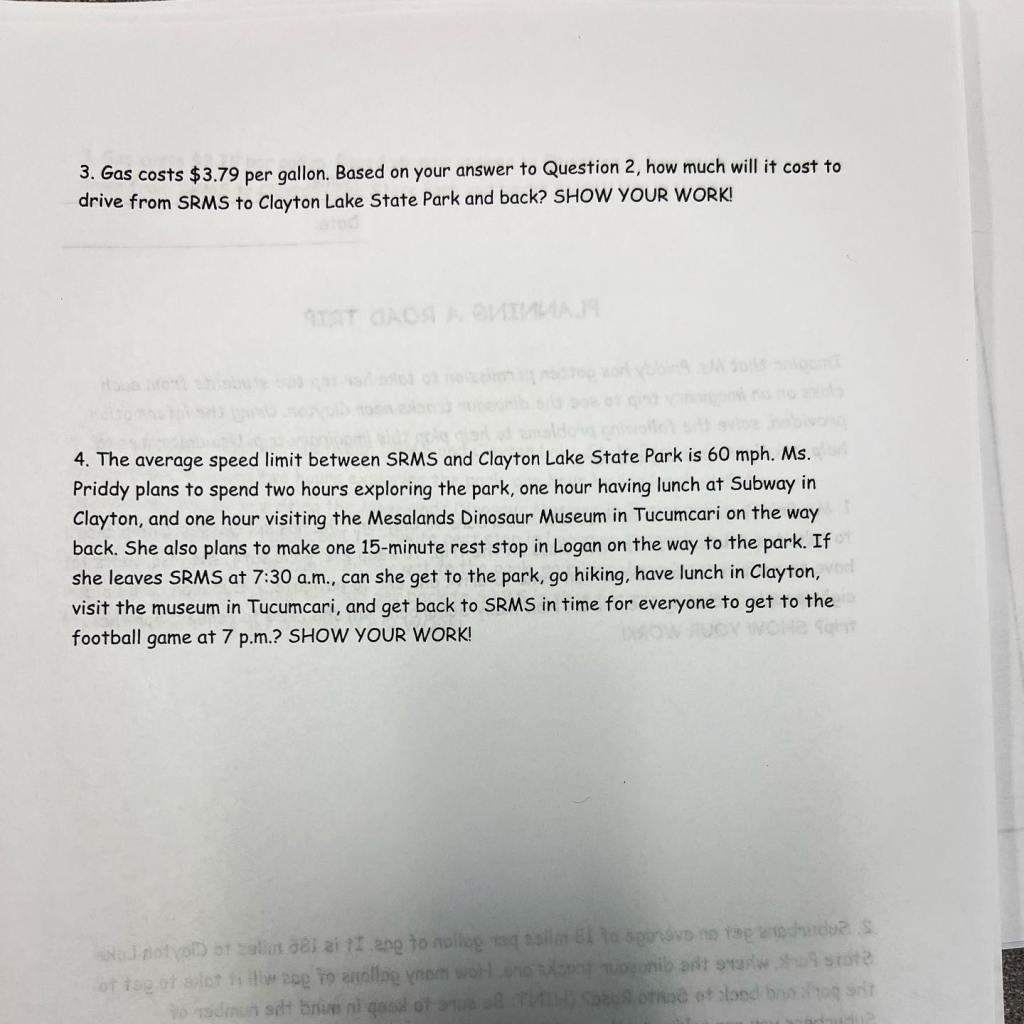
Kids sometimes have trouble understanding why they need to learn math, especially if it’s challenging, so I spend a lot of time looking for ways to make it relevant to their interests. To that end, I like to incorporate an imaginary road trip into their study of unit rates. This particular group struggles with motivation, so I planned an imaginary trip to Clayton Lake to see the dinosaur tracks and asked them a series of four questions about gas mileage, expenses, speed, and itinerary. They worked in small groups to answer the questions, and the first team to answer all four questions correctly earned dinosaur plushies.
My kids love dinosaurs, competition, working in groups, and getting stuff for free, so a team competition with free dinosaurs on the line yielded 100% engagement. Better still, the kids saw the practical application for the math they were learning, which means they’ll be more likely to remember it and use it later.
Below are the questions we used. If you do something similar in your classroom, you’ll obviously want to choose a location in your area and use Google to get the distances, prices, etc., but this gives you a rough idea of how I put this together.
You can get more elaborate if you want. Last year, when my sixth-graders were learning ratios, I put together a multi-day unit that involved planning every detail of an imaginary trip from House, New Mexico, to Holbrook, Arizona, to go hiking in the Painted Desert. We figured up mileage, meal costs (including tip and tax), gas prices, lodging, travel time, bottled water usage, and I don’t remember what all else. It was a long unit, but the kids really got into it — especially after the owner of our chosen lodging establishment, the Wigwam Motel, was kind enough to send them some key tags and postcards to keep as souvenirs of their imaginary trip.
I didn’t have as much time available this year, so I kept our trip short and simple, but the kids still had a good time. If you’re looking for a way to make unit rates understandable, I can highly recommend this approach.
Emily

 Foolish Wand-Waving