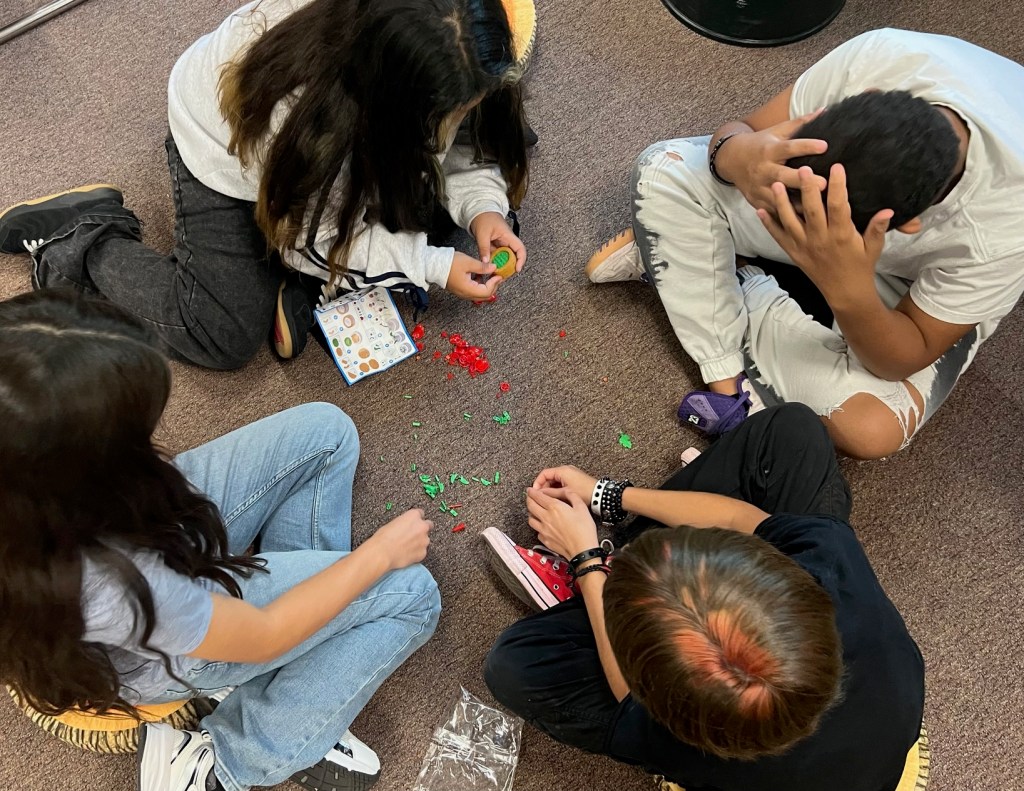
The goal of any lesson plan should be 100% engagement. The more fun the activity, the higher your likelihood of hitting that number.
Two things will get you to 100% engagement every time: Play-doh and Legos.
Last year, I discovered that many of my sixth-graders lacked the soft skills necessary to work effectively in small groups. To remedy that problem, I started this semester by isolating those skills and teaching them explicitly before getting into content-based lessons.
Delegating tasks became a two day unit. On Day One, I assigned the kids to groups and had them fill out a questionnaire about their individual skills. After assessing their strengths, they used that information to assign themselves specific roles: facilitator, researcher, presenter, or scribe. At the end of the lesson, the kids shared their assignments and explained their reasoning to the class.
On Day Two, I handed each group a small set of Lego knockoffs and gave them about 45 minutes to assemble it, awarding prizes for speed and accuracy. As the kids worked, they fulfilled their assigned roles: The facilitators kept track of time, the researchers kept an eye on the instructions and made sure the group’s work matched the diagrams at each step, and the presenters explained the group’s process to the rest of the class when they finished. The scribes didn’t have much to do, but every member of the group was responsible for helping with the actual assembly process.
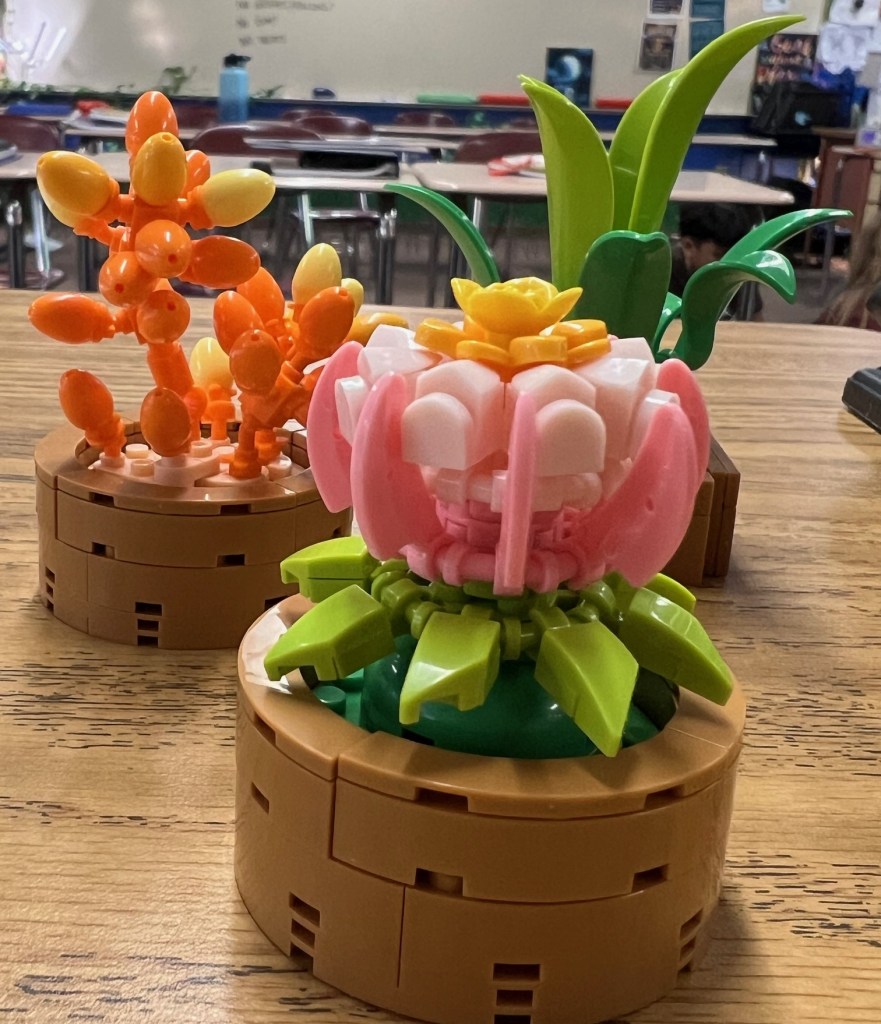
At the end of the class period, we did a whole-class debriefing in which the kids analyzed what worked and what didn’t and discussed what they would do differently if they could start over.
The kids had a ball, and as the groups head into their first content-based project tomorrow — a simple exercise in which they are to write their own questions for a class discussion about Edgar Allan Poe’s “The Raven” — I’m looking forward to seeing how they apply their Lego lesson to a more academic task.
To keep my costs down, I bought this bulk pack of off-brand Lego sets from Amazon, which runs about $36 for 18 individually packaged sets, each with its own instruction sheet. The bricks are smaller than standard Legos, but the instructions were fairly clear, and we didn’t have any missing pieces, which is about all I can ask for $2 per group.
Emily


