
Posted in Classroom environment, Classroom reveal, Decor, Student engagement, Whimsy

Chapter 77: Classroom Reveal 2025

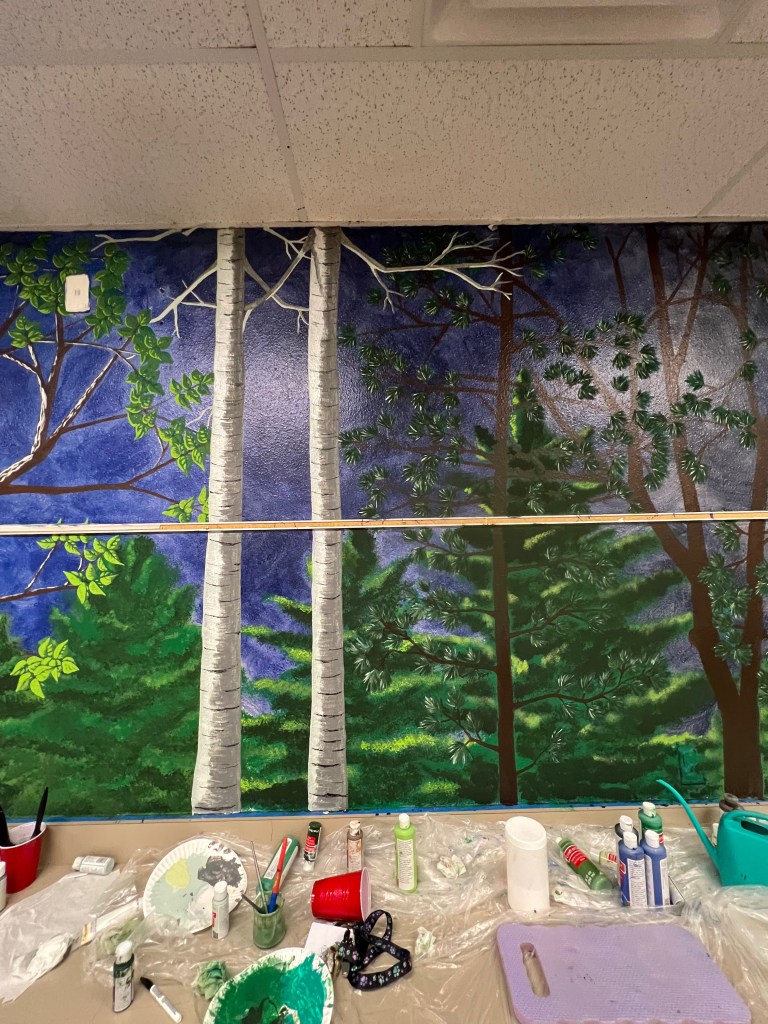
I didn’t bother with a classroom reveal last year, because frankly, my classroom was a bit underwhelming. After a year of dodging reckless drivers on I-40, I decided the risk of flaming death was just a little too high for my comfort, so in the spring of 2024, I applied for a job teaching sixth-grade ELA at a school much closer to home. It was a great assignment, except for one glaring problem: I couldn’t convince the upper-level administrators to let me paint my room, so I had to settle for fairy lights and whimsical bulletin boards. The kids and their parents were impressed, but I wasn’t. Temporary wall hangings feel hopelessly liminal to me, and liminal spaces have an aura of wrongness about them that no amount of wishful thinking will overcome.

After my kids posted stellar scores on the middle-of-year benchmark test, I went to our then-superintendent — who was new to the district and very enthusiastic about Doing Things Differently, and whose support I’d been cultivating for several months — and asked again.

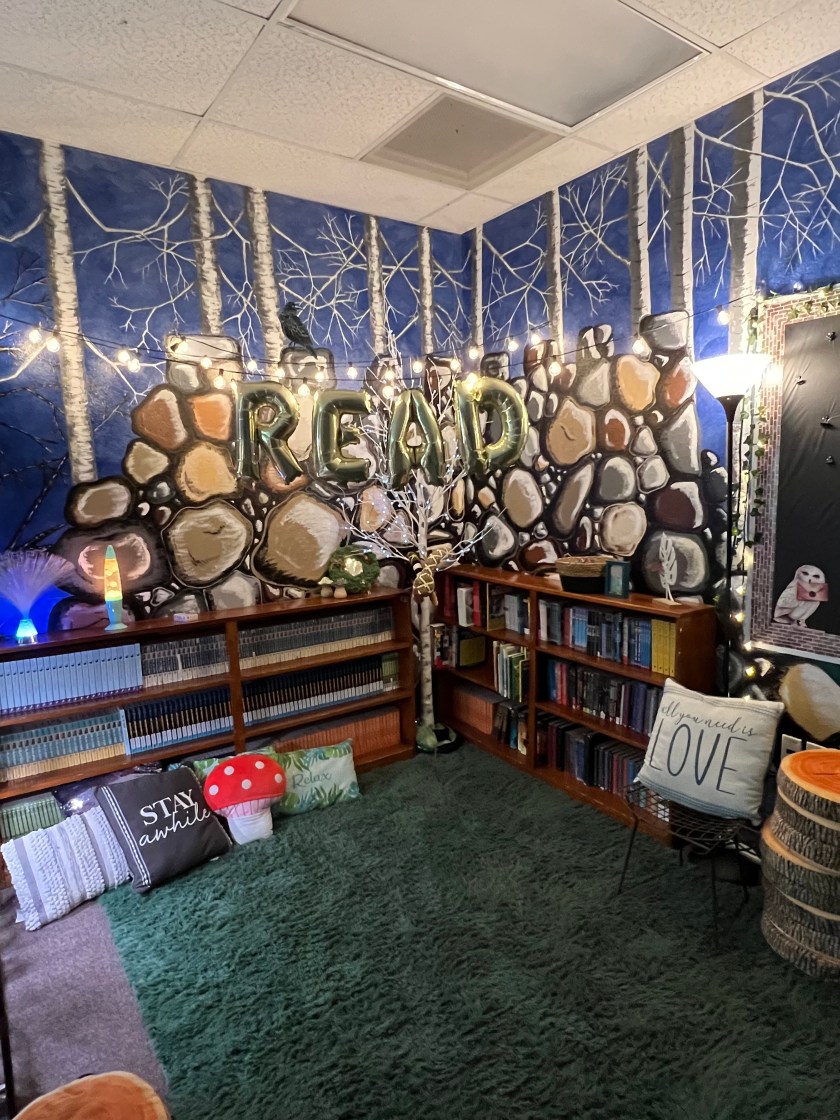
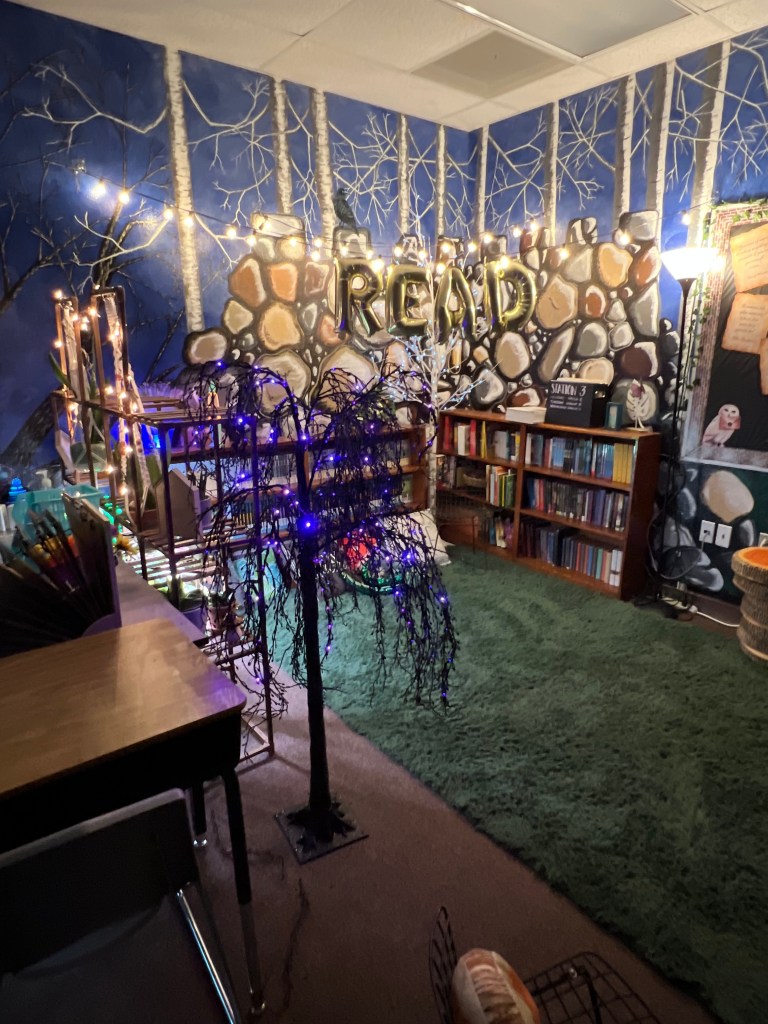
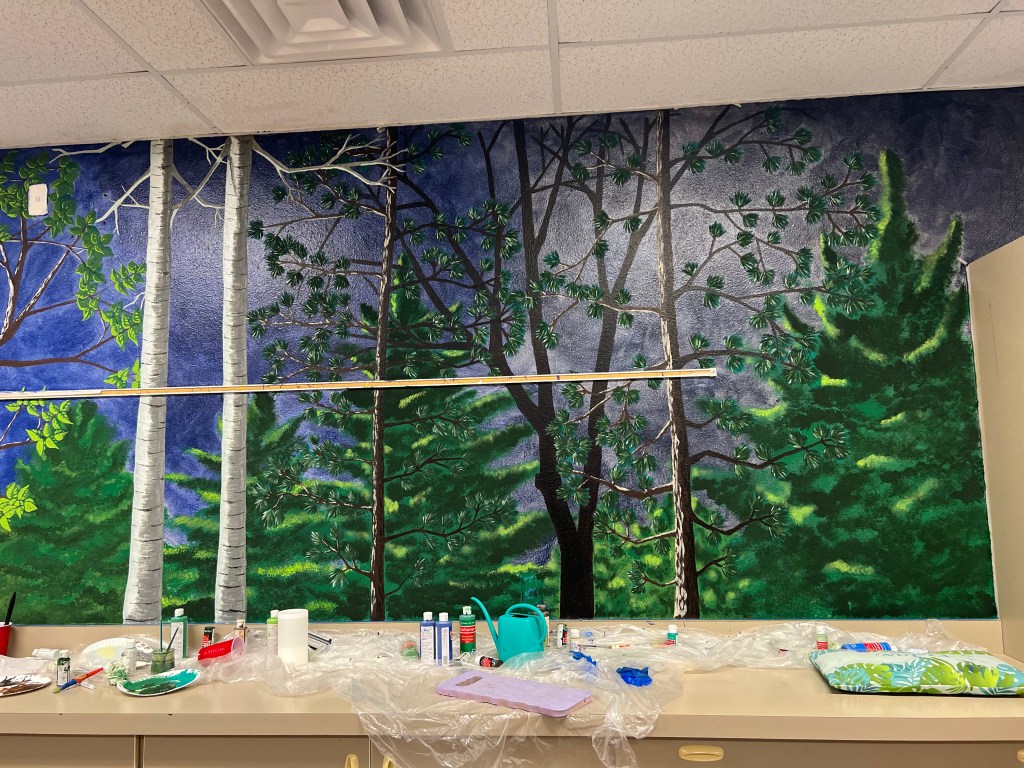
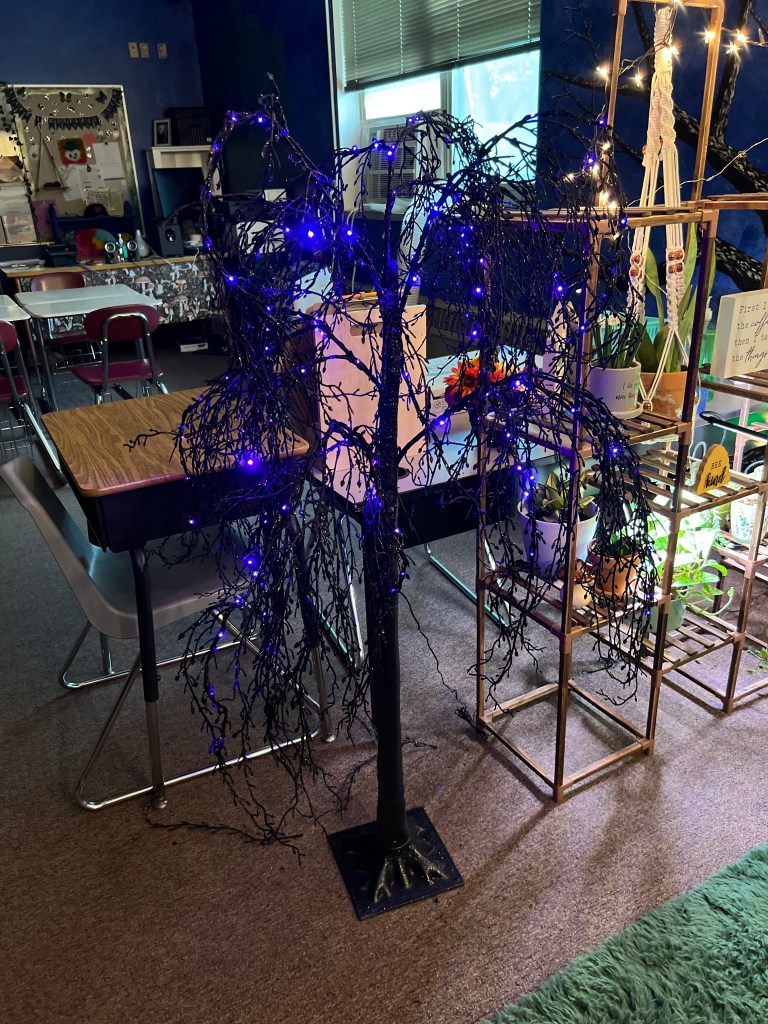
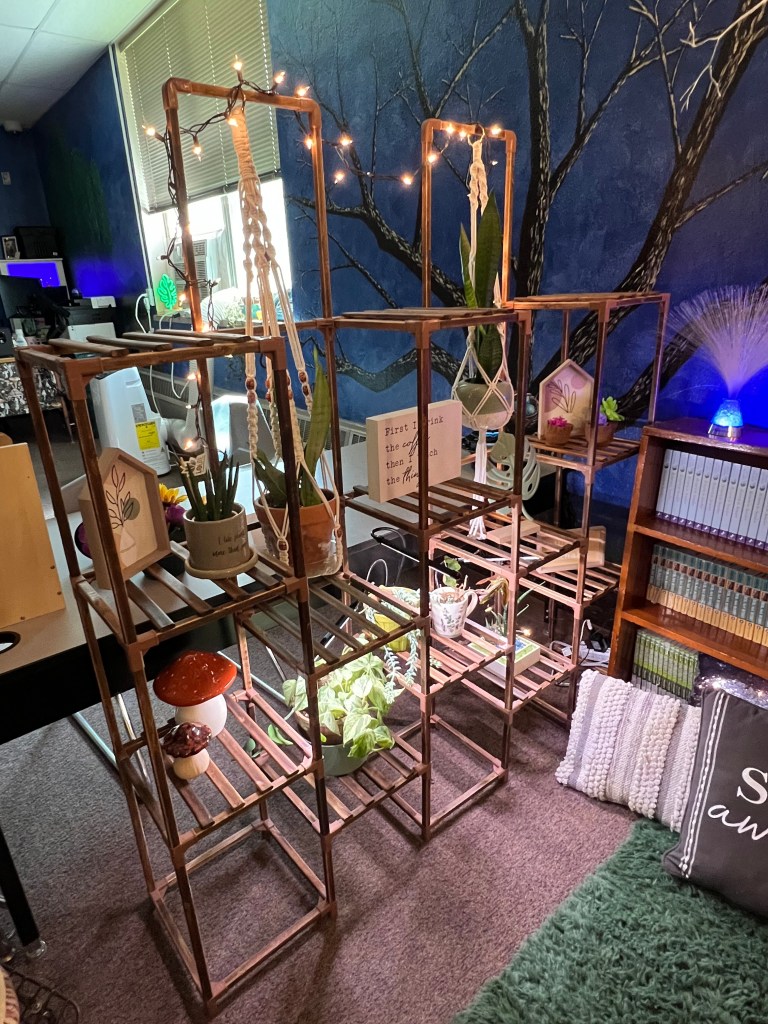
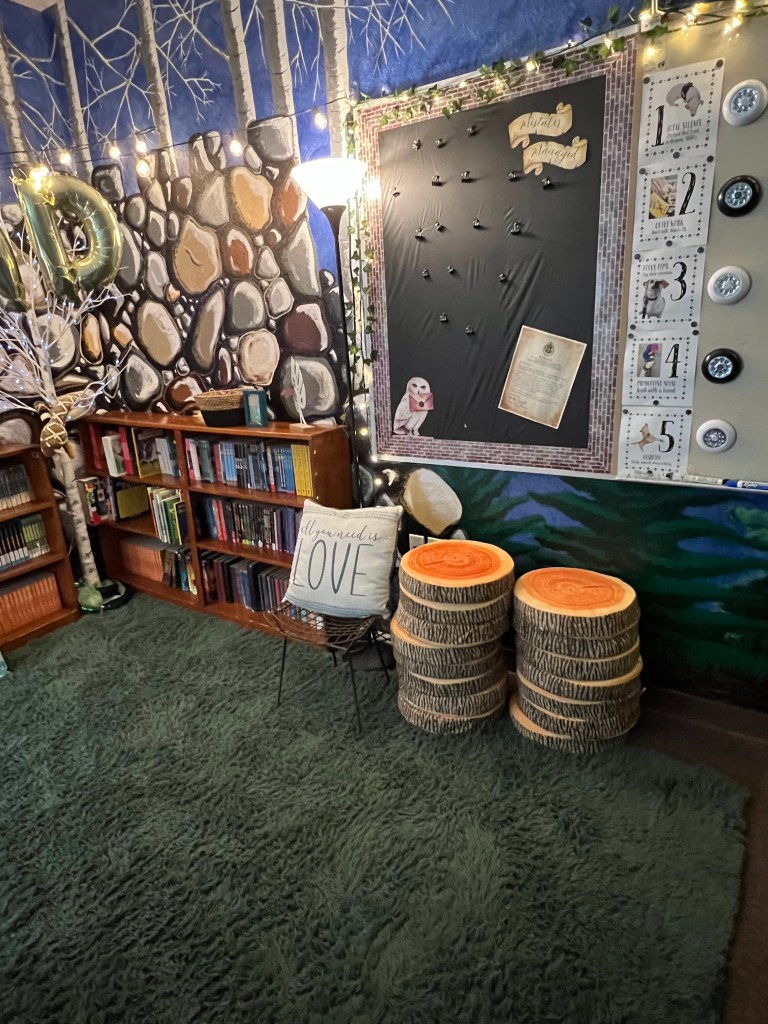
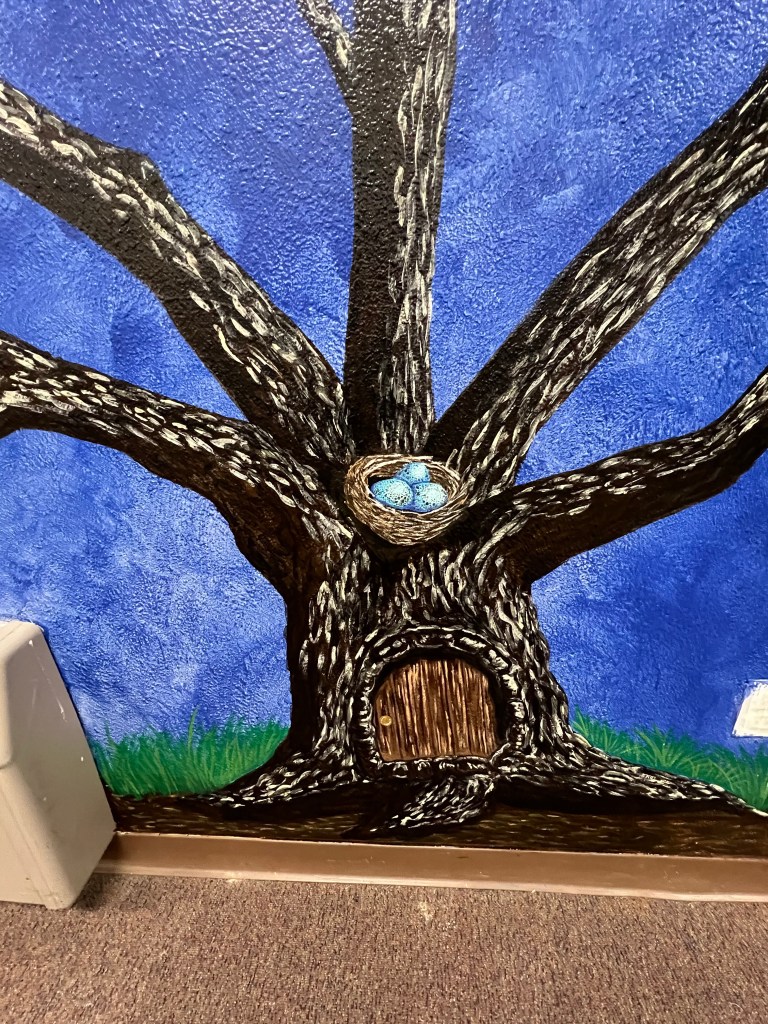
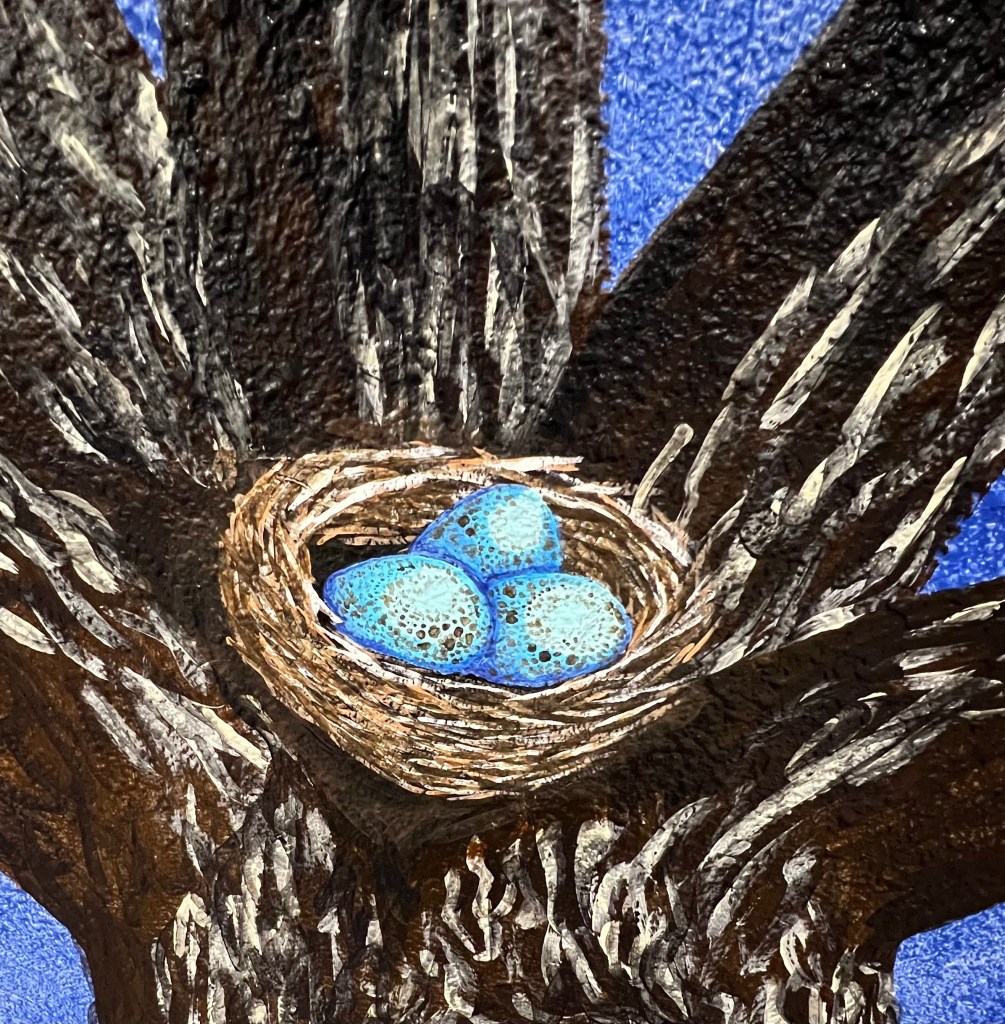
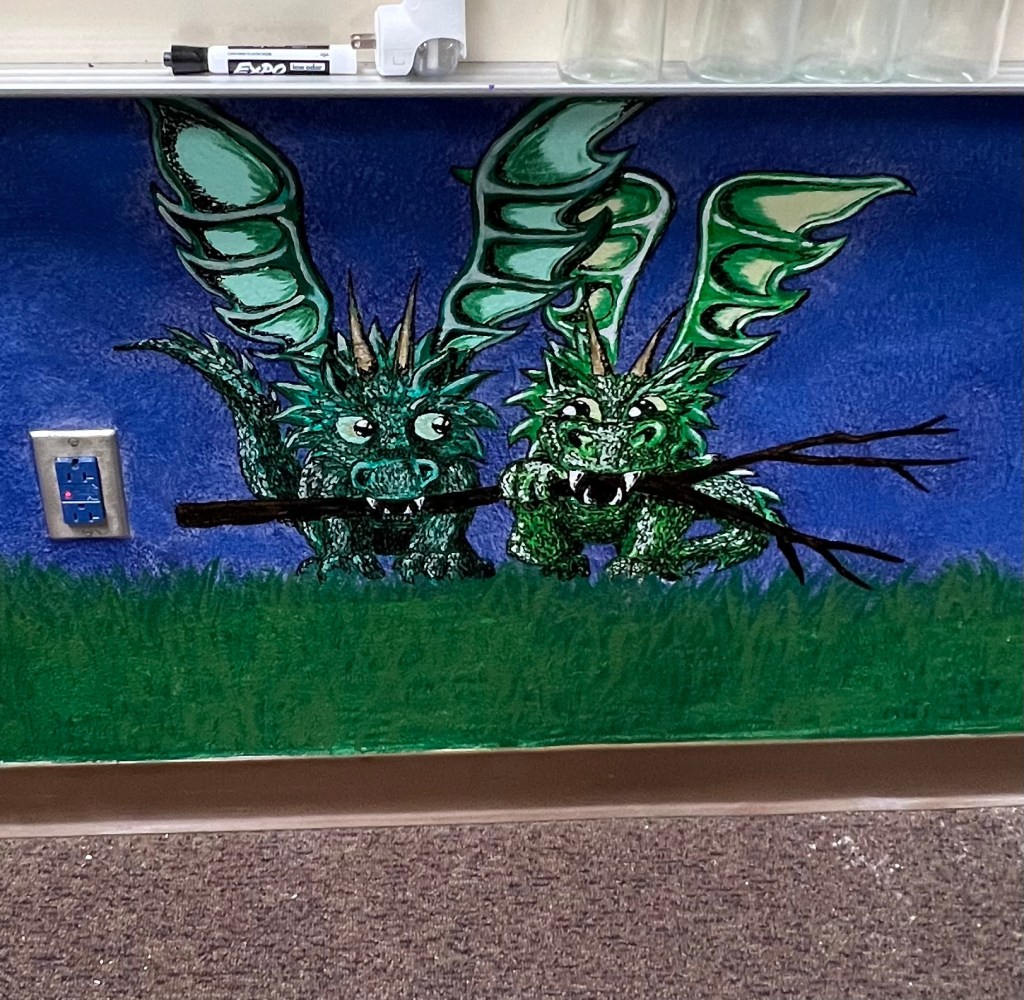
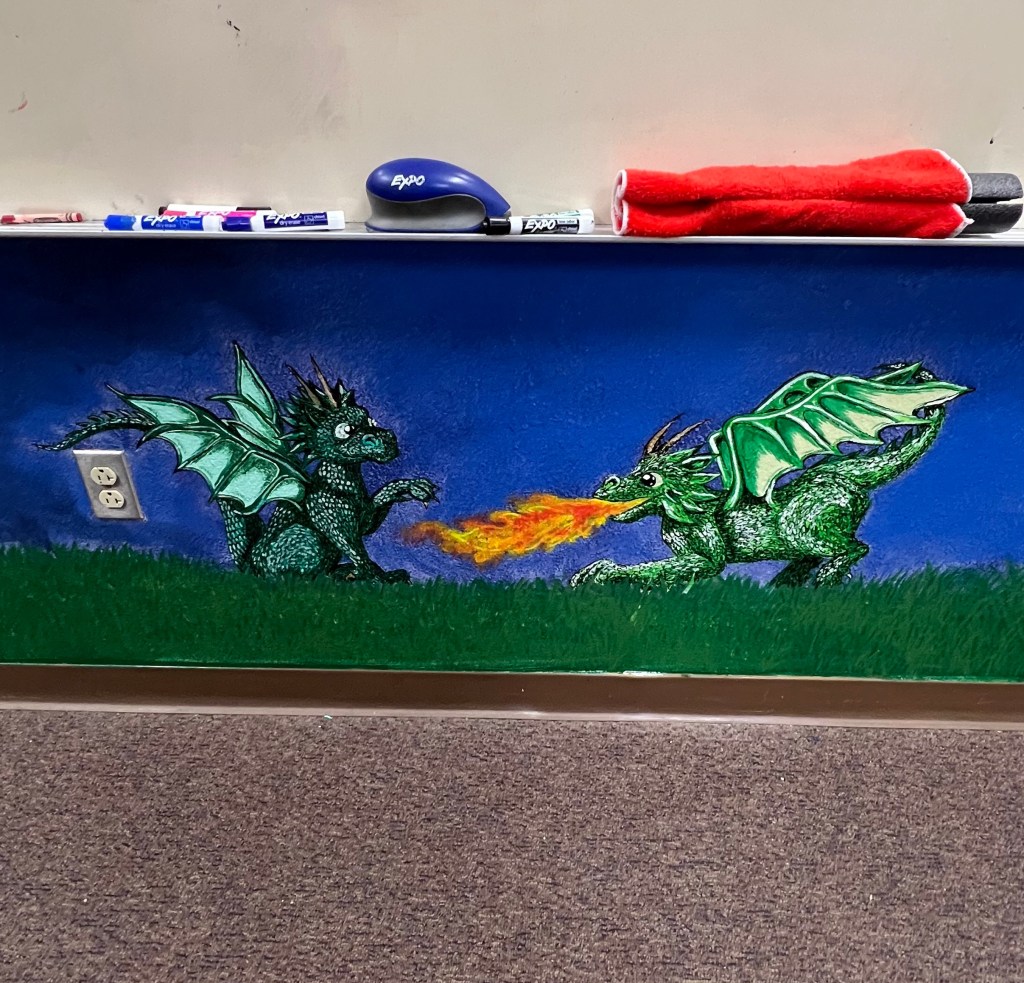
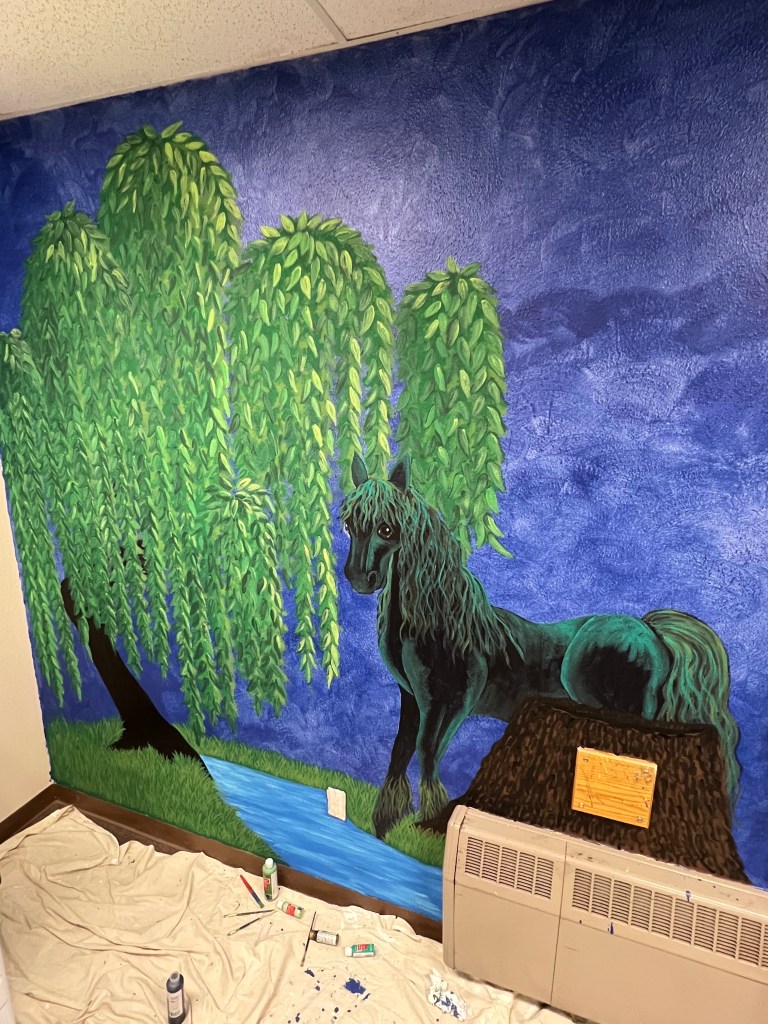
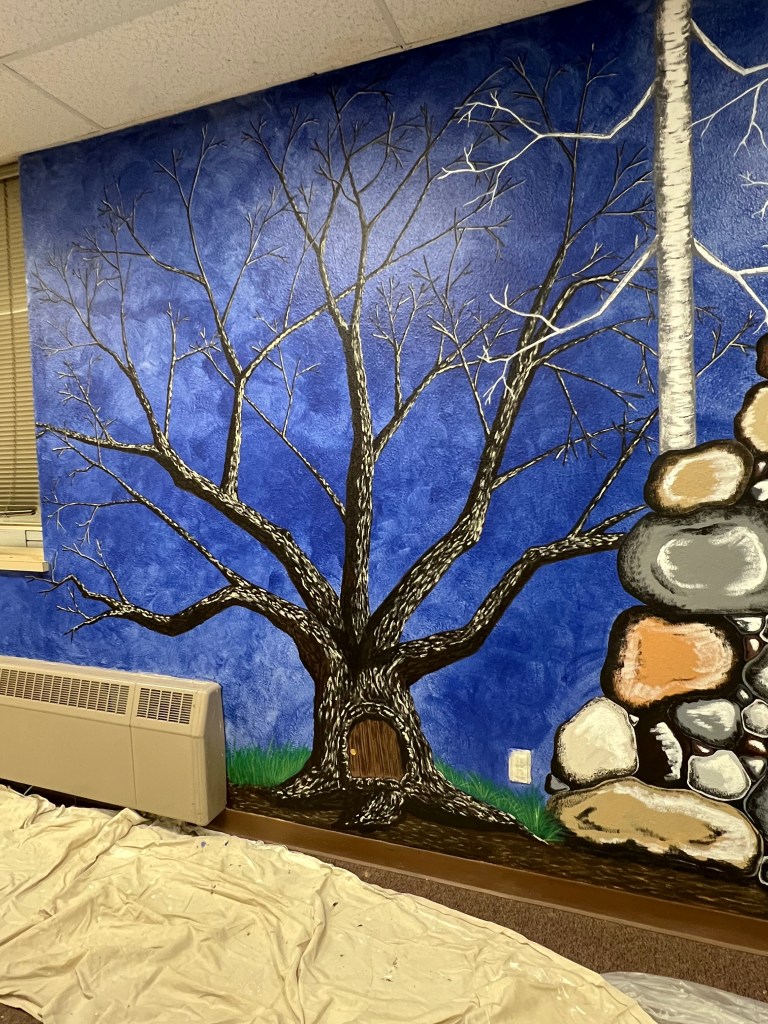
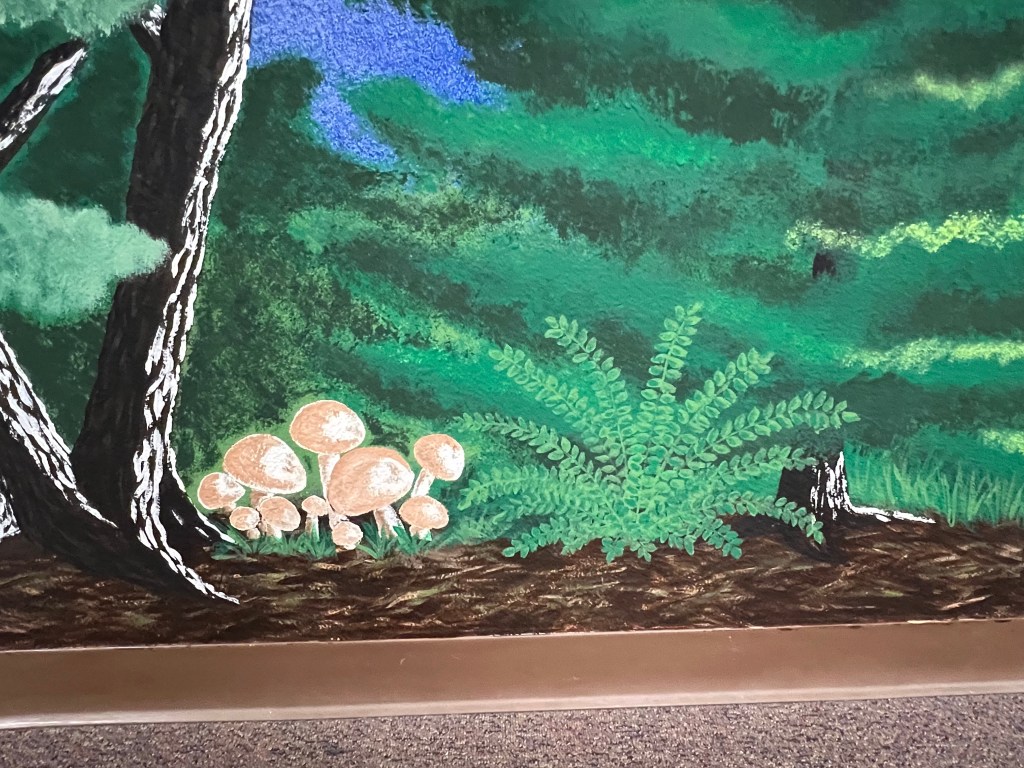
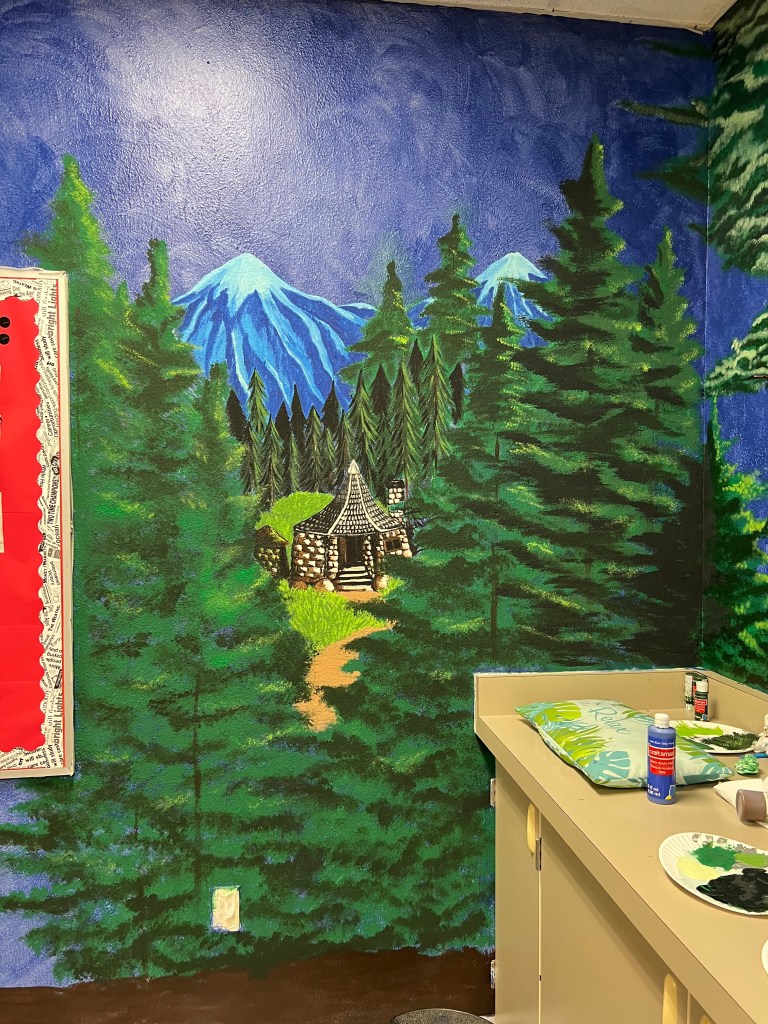
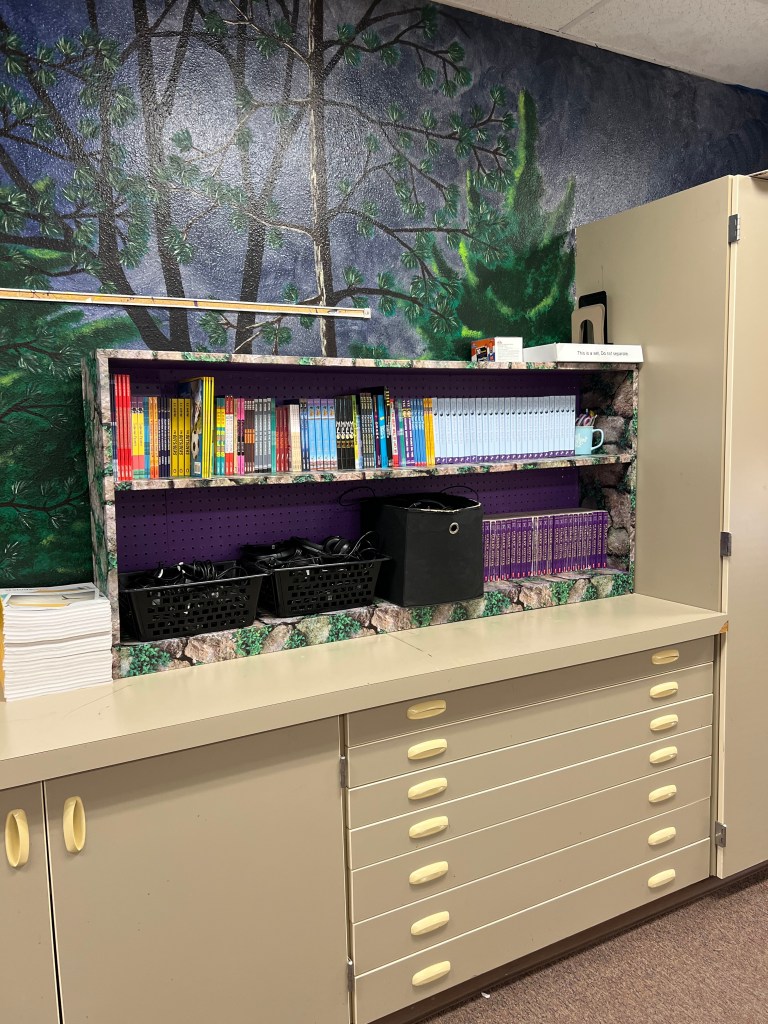
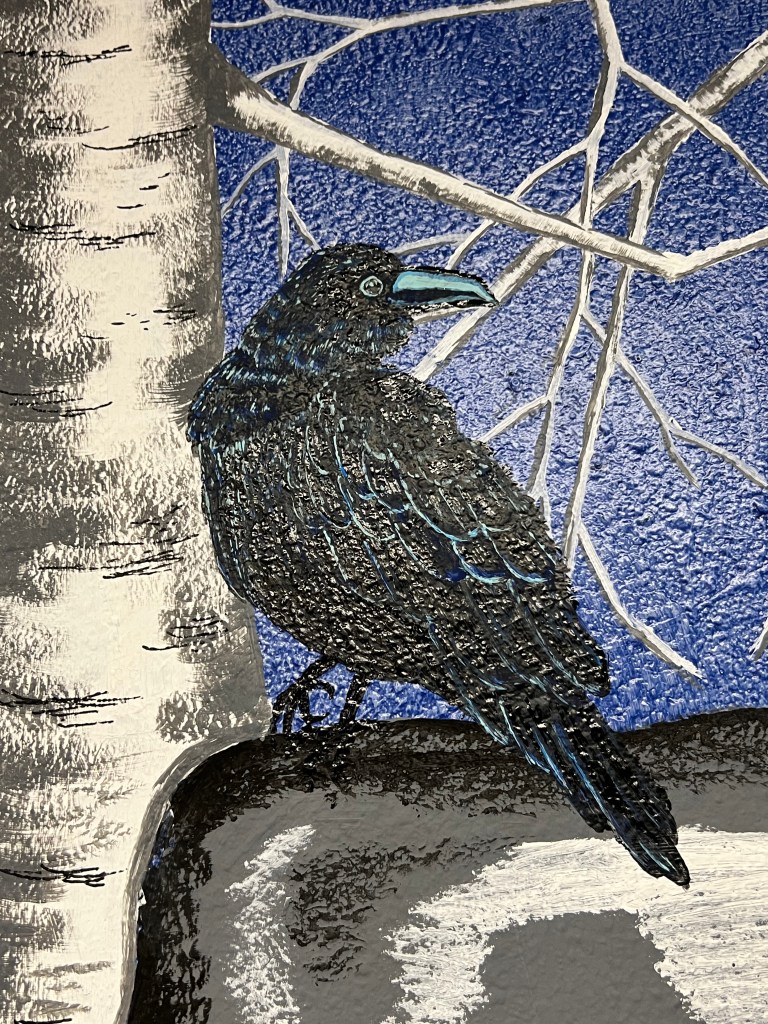
Welcome to the enchanted forest, where dragon puppies frolic below a whiteboard, a deceptively cute kelpie dips a toe into a stream running next to my desk, a spooky old tree sports a clutch of raven’s eggs and a likely portal to the Otherworld (conveniently tucked out of sight under a worktable), and the bookcases lean against the stone remnants of some long-forgotten castle, watched over by a raven who may or may not be* an incarnation of a Celtic battle goddess. In a nod to my Potterheads, I also tucked Hagrid’s hut into a little clearing behind some evergreens, and there’s enough open space here and there for me to add flourishes later if the mood strikes me.

The kids love it, and it’s making the workstation format that I’m using this year way more fun than it has any right to be. Three days a week, the kids work in small groups, rotating to a different workstation each day — one focused on writing, one on mechanics, and one on reading. The reading station is in the corner, where they sit on log-slice pillows atop a fluffy green carpet and relax while they learn to annotate the stories they read. On Thursdays, we do whole-group activities, and the kids who are all caught up on their work get to sit on the same carpet and read to my three-legged spaniel mix, Pearl, who was certified as a therapy dog last year. (I’ll have another post on that soon.)

If you can convince your administration to let you paint murals in your classroom, I highly recommend it. A little creativity makes a big difference.

Emily

* Is, of course. My master’s thesis was a novel about a 10-year-old banshee who discovers she is the latest incarnation of the Morrigan. Shapeshifting is one of her powers, and — in keeping with Celtic mythology — she frequently takes the form of a raven.

Posted in Uncategorized

Chapter 58: Teaching with brain fog, Part I

If you’re among the thousands (millions?) of people struggling to function through brain fog in the wake of a COVID infection, I have a few strategies to share that have really helped me over the past 10 months as I’ve adjusted to a new normal.

One of my weirdest post-COVID experiences started right after my fever broke: For several months, my brain seemed to have been taken over by my iPhone’s predictive-text algorithm — the one that thinks if you start typing “obstinate,” you must mean “objectivity,” or if you’re typing “introvert,” you must mean “intramural.” It was exactly as annoying as you think it was. I thought I’d finally gotten past it a few months ago, but this weekend, I was texting with my little brother and typed “under” when I meant “unto,” so apparently this is still a thing when I’m tired or under stress.

Anyway, the main coping strategies I have for this weird dysphasia — the fancy term for when your brain refuses to use words right — are to copy edit the snot out of everything I write and to offer the kids bonus points for finding any mistakes I miss.

When I taught in Oklahoma, I would deliberately plant an error in the objectives and instructions I posted on the board each day, then offer five bonus points to the first kid who caught it. This accomplished five things:

  1. It taught the kids that it’s OK to make mistakes. If the teacher makes at least one mistake every single day, then she obviously doesn’t expect everybody else to be flawless.
  2. It encouraged the kids to get to class on time. If you’re the first one in, you’re the first one to see the board, which means you have a better chance of being the first one to catch the error.
  3. It encouraged the kids to look at the board. There’s no point in posting objectives or instructions if nobody reads them. I never had to worry about kids asking what they were supposed to do, because they came in and read the instructions as soon as they hit the door.
  4. It gave the kids practice proofreading — always a plus in an ELA class, but not a bad exercise for other classes, either. Attention to detail is valuable in every discipline.
  5. It increased the chances of somebody catching it if I made an inadvertent error. Usually, the mistake I planted was the only mistake on the board, but some days, I’d go too fast or get distracted while I was writing and end up making an accidental error somewhere. The kids always caught it for me.

If you aren’t bribing your kids with bonus points to get them to proofread for you, it’s worth trying. I think you’ll find it increases engagement and improves your relationship with your students, who tend to feel safer when they know that A.) you make mistakes, too, and B.) you are willing to admit it.

Emily

Posted in ELA, English, Spelling

Chapter 51: Dunderheads

I’m an English teacher and an old copy editor. If I taught at Hogwarts, my Boggart — a shapeshifter that assumes the form of your deepest fear — would probably look a whole lot like a typo.

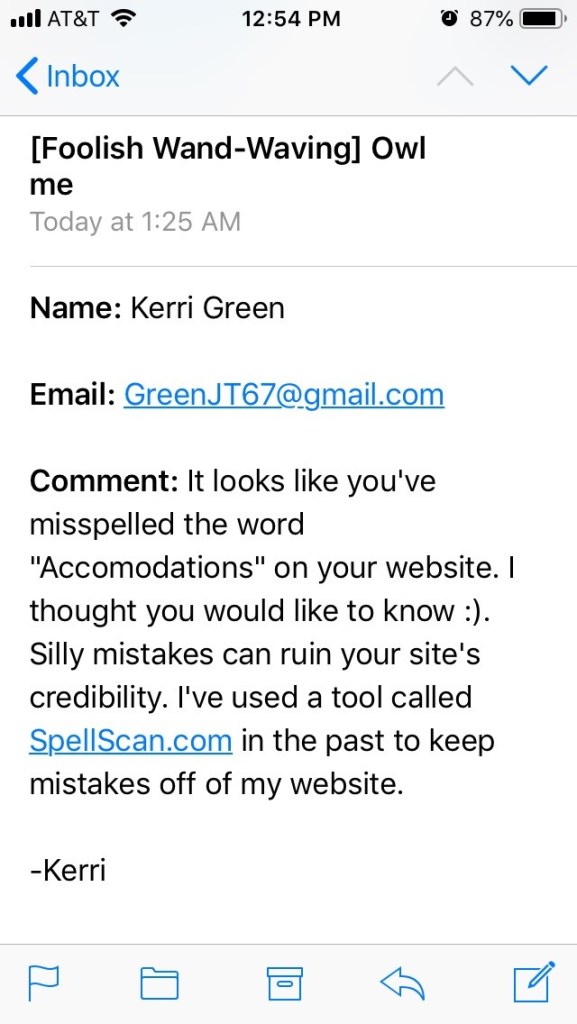
With that in mind, here is the email I received a couple of weeks ago:


As Professor Lupin would say: Riddikulus.

In case you’re wondering, this was a scam.

I think I know who sent the email, though:

Dunderheads.

On the up side, this will make a great basis for a mini-lesson on why spelling is important. Thanks for the teachable moment, suckers.

Emily


Posted in Dr. Seuss, ELA, English, Literature, Whimsy

Chapter 50: All the Whos Down in … Heorot?

OMGOMGOMGOMG.

You guys.

You. GUYS.

I have no idea how I missed this for 44 consecutive years, but as I was working on lesson plans for my children’s-lit students — who presented How the Grinch Stole Christmas to the K-2 students during a special holiday story hour last month in lieu of a traditional final exam — I noticed something that delighted my little English-teacher heart:

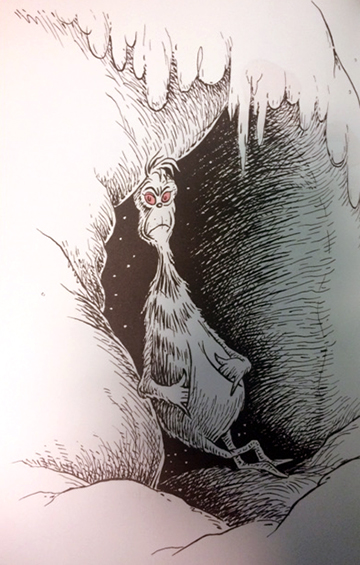
The Grinch is basically Grendel.

I don’t mean the Dr. Seuss children’s classic is a completely faithful retelling of Beowulf, because it is not. But it bears a striking resemblance to the first part of Beowulf, in the same way that Roald Dahl’s Charlie and the Chocolate Factory resembles Dante’s Inferno, and The Lion King resembles Hamlet.

Check it out:

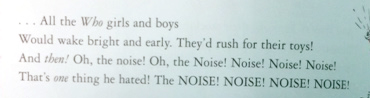
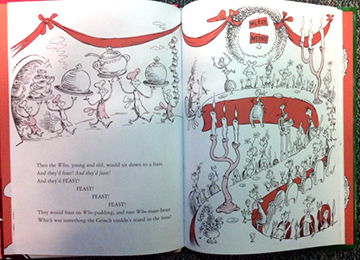
In the Anglo-Saxon epic, King Hrothgar builds a big mead hall called Heorot, where he and his subjects feast, sing, and party like rock stars every night, inciting the rage of the monster who lives in a nearby cave.

In the Seussian epic, (OK, maybe not quite an epic, but by picture-book standards … look, just go with it) the Whos down in Who-ville feast, sing, and party every Christmas, inciting the rage of the monster who lives in a nearby cave.

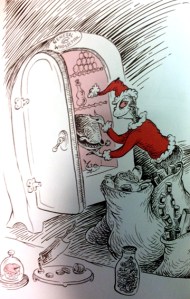
In both stories, the monsters decide to solve their problems by breaking and entering with the intent of committing further crimes.

The poems diverge after this point — the Grinch sticks to larceny in his attempt to quiet his raucous neighbors, while Grendel goes for homicide and cannibalism — but the premises are too similar for me to believe they’re a coincidence.

After all, Dr. Seuss employed iambic tetrameter in Green Eggs and Ham (Sam-I-Am is a pun, as I explain here), so why wouldn’t he draw inspiration from Beowulf?

I’m kind of disappointed I didn’t notice this last year, when my seniors were having so much fun delving into John Gardner’s Grendel. I’d love to hear them debate whether the Grinch is a nihilist or an existentialist.

Emily

Posted in Collaborative learning, ELA, English, Literature, Writing assignments

Chapter 37: Texting with Antigone

About 11 years ago, I worked with a young teacher at an interest-based digital-media magnet school who was struggling to get her sophomores to write. At the time, I oversaw part of the magnet program, and I nudged her to think in terms of our school’s theme.

To that end, I asked her one question: “Do the kids text?”

Of course they did, she said. All the time. It was driving her nuts; we were supposed to confiscate their phones if they used them in class, and for a while, that seemed to be all we did all day.
Continue reading “Chapter 37: Texting with Antigone”