Posted in Collaborative learning, Competition, Math, Student engagement, Success

Chapter 68: Road Trip!

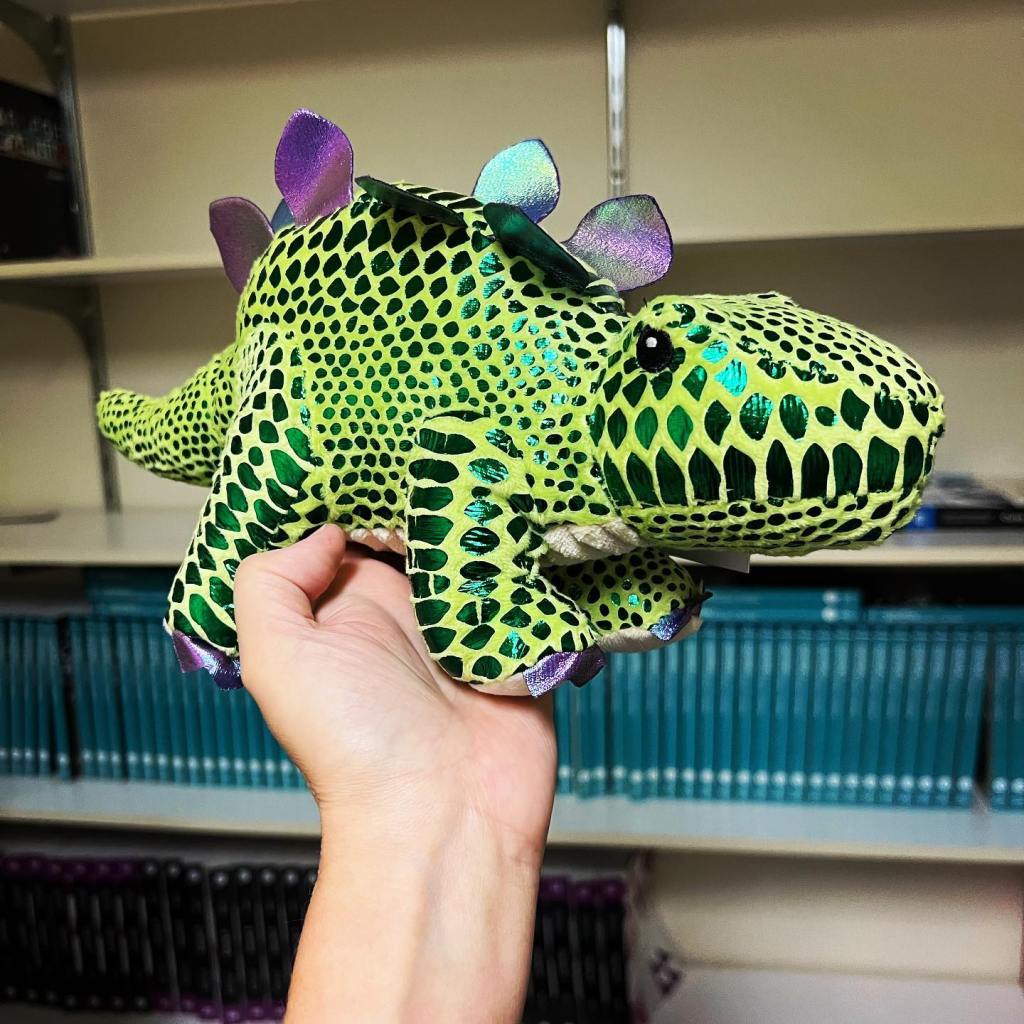
Kids sometimes have trouble understanding why they need to learn math, especially if it’s challenging, so I spend a lot of time looking for ways to make it relevant to their interests. To that end, I like to incorporate an imaginary road trip into their study of unit rates. This particular group struggles with motivation, so I planned an imaginary trip to Clayton Lake to see the dinosaur tracks and asked them a series of four questions about gas mileage, expenses, speed, and itinerary. They worked in small groups to answer the questions, and the first team to answer all four questions correctly earned dinosaur plushies.

My kids love dinosaurs, competition, working in groups, and getting stuff for free, so a team competition with free dinosaurs on the line yielded 100% engagement. Better still, the kids saw the practical application for the math they were learning, which means they’ll be more likely to remember it and use it later.

Below are the questions we used. If you do something similar in your classroom, you’ll obviously want to choose a location in your area and use Google to get the distances, prices, etc., but this gives you a rough idea of how I put this together.
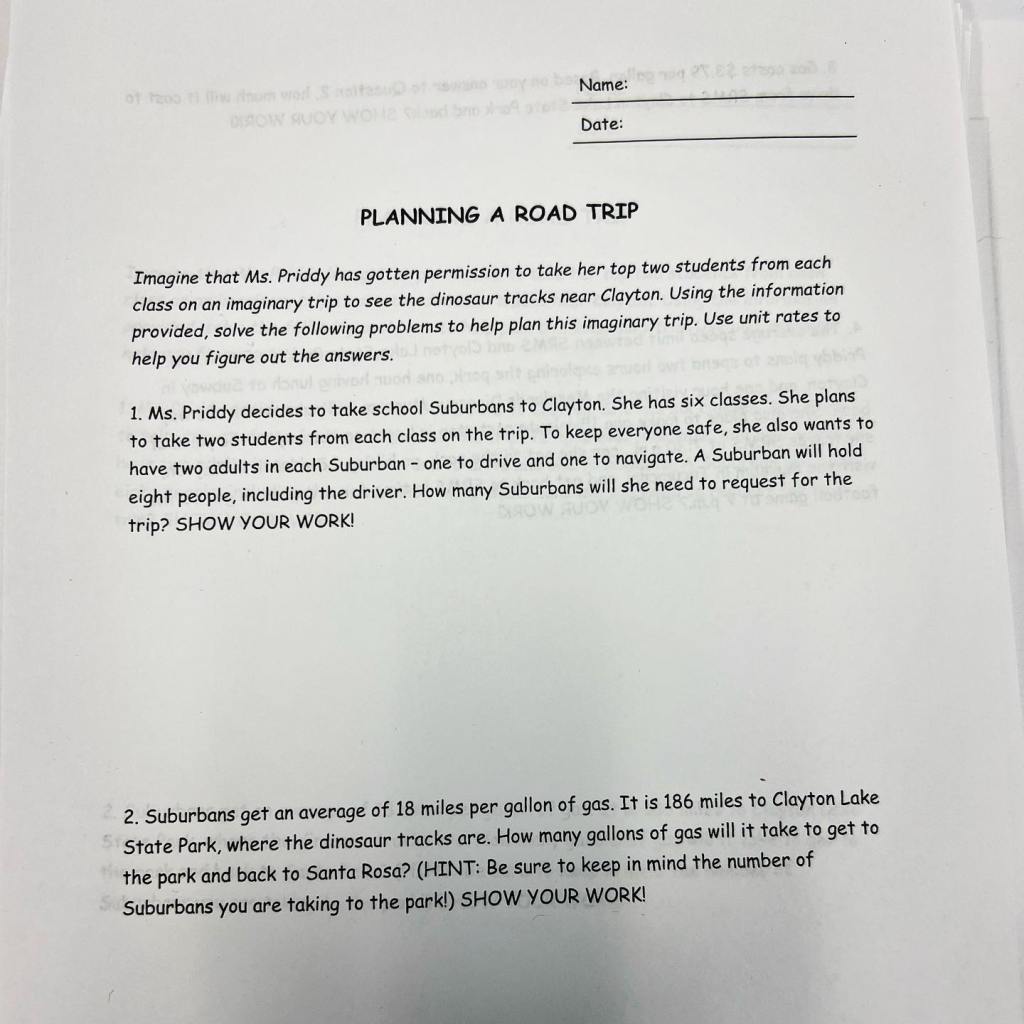
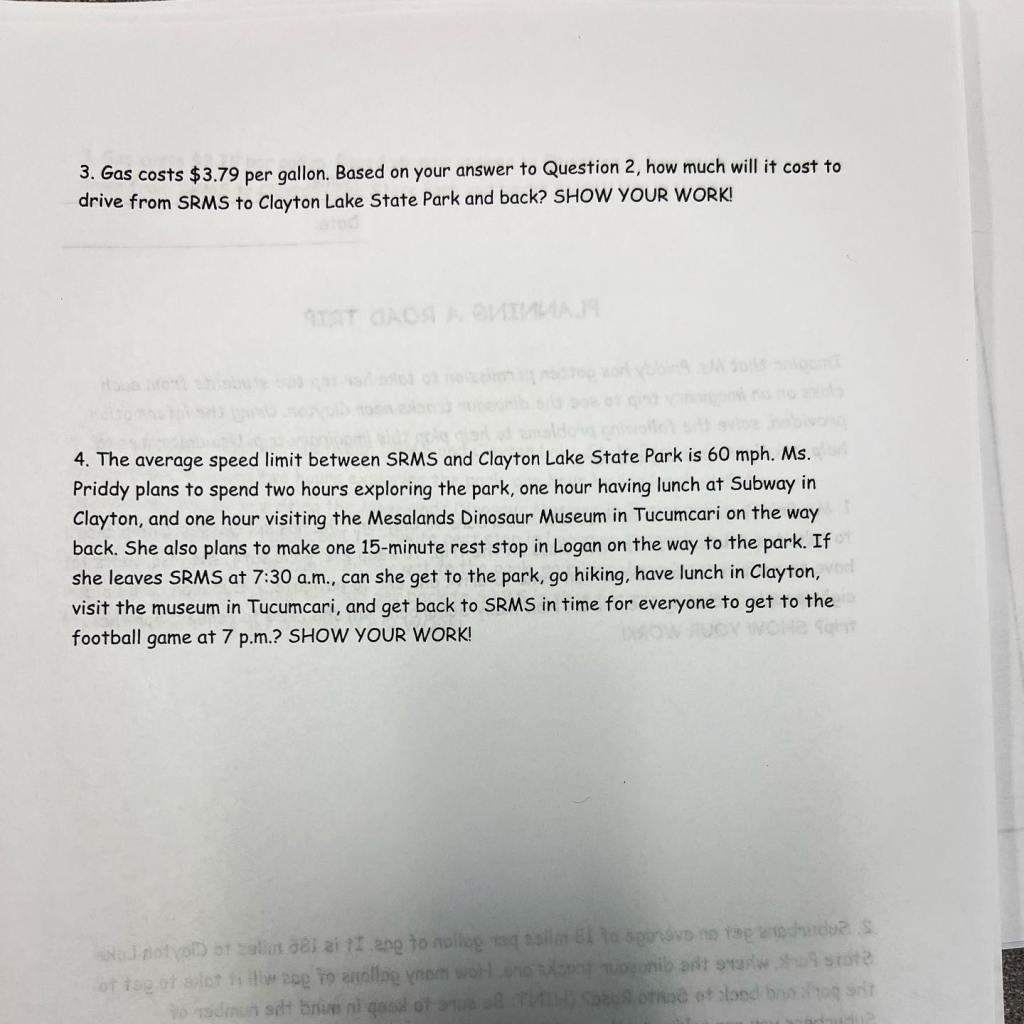
You can get more elaborate if you want. Last year, when my sixth-graders were learning ratios, I put together a multi-day unit that involved planning every detail of an imaginary trip from House, New Mexico, to Holbrook, Arizona, to go hiking in the Painted Desert. We figured up mileage, meal costs (including tip and tax), gas prices, lodging, travel time, bottled water usage, and I don’t remember what all else. It was a long unit, but the kids really got into it — especially after the owner of our chosen lodging establishment, the Wigwam Motel, was kind enough to send them some key tags and postcards to keep as souvenirs of their imaginary trip.

I didn’t have as much time available this year, so I kept our trip short and simple, but the kids still had a good time. If you’re looking for a way to make unit rates understandable, I can highly recommend this approach.

Emily

Posted in Collaborative learning, Competition, Differentiated instruction, Games, Instructional design, Kinesthetic, Learning styles, Math, Student engagement, Test prep

Chapter 66: On Target

I have a love-hate relationship with school breaks. On the one hand, they’re a chance to decompress, catch up on some projects at home, do some advance planning, and spend some time with my dogs. On the other hand, they’re a monumental disruption that distracts the kids and makes it extremely difficult to get them to concentrate on anything long enough to learn.

This ain’t my first rodeo, so I got wise this year and didn’t bother attempting to teach anything new the week before spring break. Instead, I devoted the entire week to activities meant to reinforce concepts the kids had already mastered: a catch-up day on Monday to help my frequent absentees backfill those last few holes in the gradebook ahead of report cards; a doodle-by-numbers activity I pulled off Teachers Pay Teachers to review angle-sum rules; an Easter-egg hunt with math problems inside the eggs and a key that required the kids to find the correct answers in order to get their next clue; and a low-prep darts game we’ve played a time or two in the past.

The game is very simple. Get yourself a ball-darts game and a bunch of math problems over whatever the kids have been learning recently. I bought the dartboard you see in the picture from Amazon earlier this year. The kids like it because the board and the balls all light up.

Divide the class into two teams (if you have an odd number of kids, choose one to be your scorekeeper) and have them form two lines. The first kid on Team 1 throws a ball at the dartboard to determine the point value for the first question. Kid 1 can confer with the rest of the team about the answer to the question, but Kid 1 is the only person allowed to answer it. If Team 1 misses, Team 2 has a chance to rebound before throwing the ball and answering a question of their own.

I like this game a lot because it’s high-engagement; gives struggling learners a chance to practice with help from their classmates; meets the kids’ social needs; and requires no prep beyond downloading a worksheet and printing it out to use as your question bank. (Protip: If you need a bunch of questions quickly, search Teachers Pay Teachers for your concept + “drill” to find practice problem sets.)

If you want to send your engagement through the roof, keep a supply of dollar-store prizes on hand and award a small prize to the winning team. (For my middle-schoolers, I’ve found candy and anything dinosaur-themed to be popular prizes, but your mileage may vary.)

Posted in Competition, Games, Math

Chapter 65: Ka-Boom!

A lot of my students were just starting to learn their multiplication tables when the pandemic forced the world to shut down and schools to switch to a remote-learning model. As a result, multiplication is a struggle for many of them, and I’ve spent part of this year trying to backfill that gap. Rote learning is pretty dull, so I like to use games to make it more interesting for the kids.

Ka-Boom! is one of those games you can mod up to fit just about any subject. This time around, I got a bunch of popsicle sticks and wrote either a multiplication problem or the word “KA-BOOM!” on one end of each stick. I store the sticks in a ziplock bag, and when it’s time to play the game, the kids get out a coffee mug and put all the sticks in it with the problems pointing toward the bottom. To play, one person draws a stick and reads the problem on it out loud. The student then must try to solve the problem. If a player gets the correct answer, s/he can keep the stick. If a player gives the wrong answer, s/he must put the stick back. If students draw a “KA-BOOM!” stick, they must put all of their sticks back into the mug. Whoever has the most sticks at the end of the game is the winner. (There are several ways to end the game. I usually just call time about five minutes before the bell and have the kids count their sticks, collect any prizes I might decide to award, and put the game away. I’ve also had the kids set aside the KA-BOOM! sticks as they are pulled, which keeps the game from continuing forever, or if you want to do a lightning round, you can end it with the first KA-BOOM! and tally up everybody’s points to determine the winner.)